


Cycling Club Membership Card Printing
CP Cards have been supplying Cycling Club membership cards to UK clubs and organisations for over 30 years.
Every card is printed here in England, no overseas production or delays.
Orders start from just 25 cards, free delivery is included as standard, and we'll email you a photorealistic proof before anything goes to print.
Cycling clubs typically use membership cards to confirm current governing-body registration, which is often required for anyone wanting to ride in an organised club run under insurance cover. Clubs commonly organise rides into pace or ability groups — social, intermediate, or fast group — and some print the member's usual group on the card to help ride leaders quickly identify who's who at the start of a run. Cards are also handed to marshals and event volunteers as ID during club sportives or time trials.

About our Plastic Cycling Club Membership Cards

Example Cycling Club Membership Card Prices 760 microns thick
| Quantity | Price from |
|---|---|
| 25 | £75.00 |
| 50 | £79.00 |
| 100 | £85.00 |
| 200 | £99.00 | 250 | £109.00 |
| 500Popular | £175.00 |
| 1000 | £245.00 |
Prices include free UK delivery & for one design to be printed from your print ready artwork sent to the correct specifications, see our artwork guide.
Prices exclude VAT & optional extras.
Need a different quantity? Contact us for a quote.

Get a Quote for Cycling Club Membership Cards
Cycling Membership Cards printed
The single most valuable thing on a cycling club card is not the club name — it is the emergency contact on the reverse, printed individually for each rider. That is what the card is for when it matters.
Variable data makes that straightforward and costs nothing beyond the cards: solid PVC, full colour on both sides, free delivery within Great Britain, from 25 cards.
There are cycling club membership card examples below, and the full specification is on our membership card printing page.

What Belongs on a Cycling Club Membership Card
The front is straightforward enough: club name and kit colours, the rider’s name, a membership number, governing-body registration and the year the card covers. Clubs that split their Sunday run into pace groups often add the rider’s usual group, which saves ride leaders a good deal of sorting out in a car park at eight on a winter morning.
It is the reverse that deserves real thought, because a cycling club card is unlike almost any other membership card in one respect: it is carried on the rider, in a jersey pocket, for hours at a time, miles from anywhere. In practice it is one of the few pieces of identification a paramedic or a passer-by will find.
For that reason most clubs give over the back of the card to an emergency contact, printed in the largest type the space allows, with room for any medical note the rider chooses to include. Club run start times and meeting points usually fill what is left. It is a small thing to specify and the single most useful reason for a member to actually carry the card.
Why a Jersey Pocket Demands Plastic
Four hours in a rear jersey pocket, pressed against a sweating back, in weather that turns from dry to soaking without warning — and then, sooner or later, the whole jersey goes in the wash with the card still in it. That is what a cycling club card is actually asked to do.
Printed paper does not survive one wet ride of that. A laminating pouch might survive a few, until water works in behind the film at a corner and the print goes with it. Our cycling club cards are 760-micron solid PVC with the design sealed beneath the card’s own surface, so there is nothing to lift and nothing to wick behind.
They are rigid enough not to fold up in a pocket, they come out of a washing machine no different from how they went in, and a card issued in January is still perfectly readable the following December. Which matters, because a card only works as an emergency contact if it is still legible when someone needs to read it.
Options Worth Considering for Cycling Club Cards
Variable data is the one that transforms a cycling club card. Send us an Excel file and every card is printed with its own rider’s name, registration number and — crucially — their own emergency contact name and number. Every card different, one production run, no extra artwork charge. A generic club card tells a paramedic nothing; a personalised one tells them who to ring.
Colour coding by pace group is popular for the same reason it is popular in other sports: it does at a glance what reading does slowly. And a QR code — square, minimum 15mm — pointing at your club’s ride calendar or route library keeps the printed information on the card short while letting you change the detail behind it whenever you like.
Clubs running their own sportives or time trials often order a second batch for marshals and event volunteers, punched with a 5mm hole so they hang from a lanyard and are identifiable at a junction. Sequential numbering ties the whole lot back to your membership register.
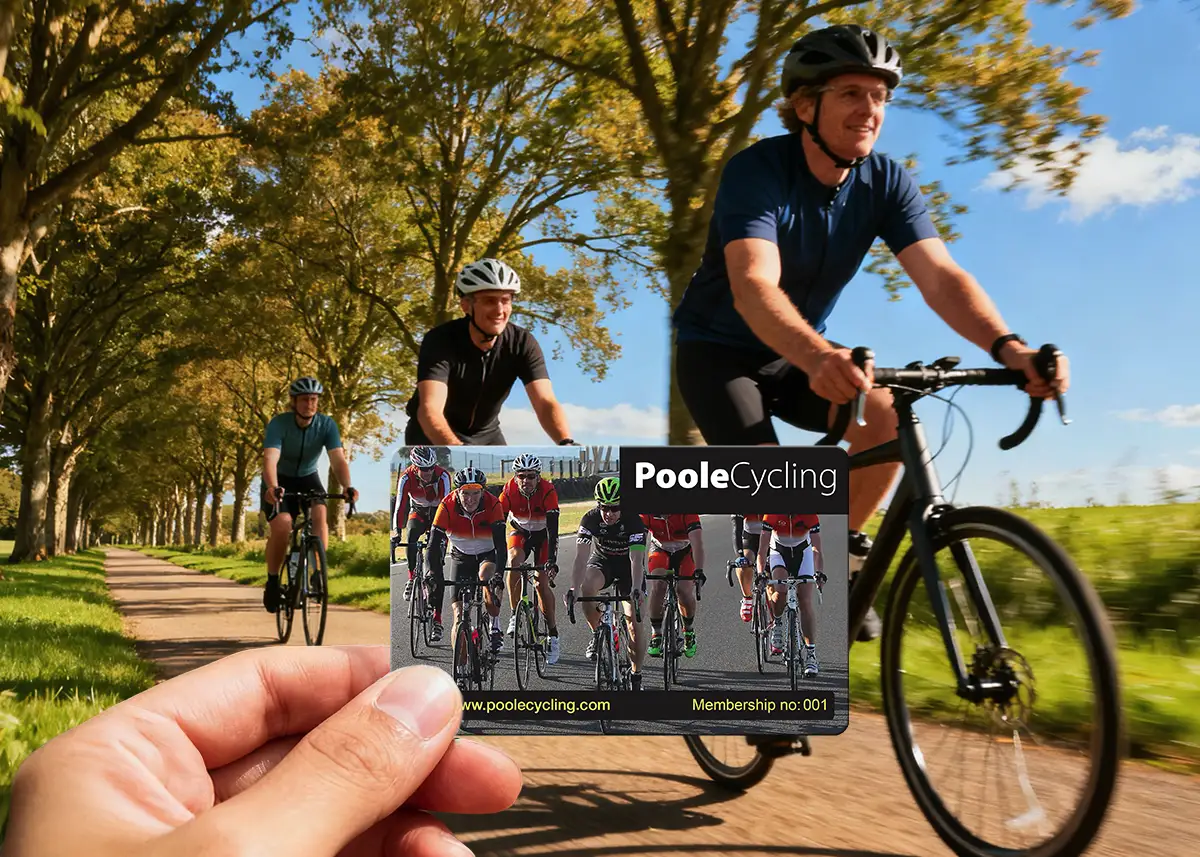
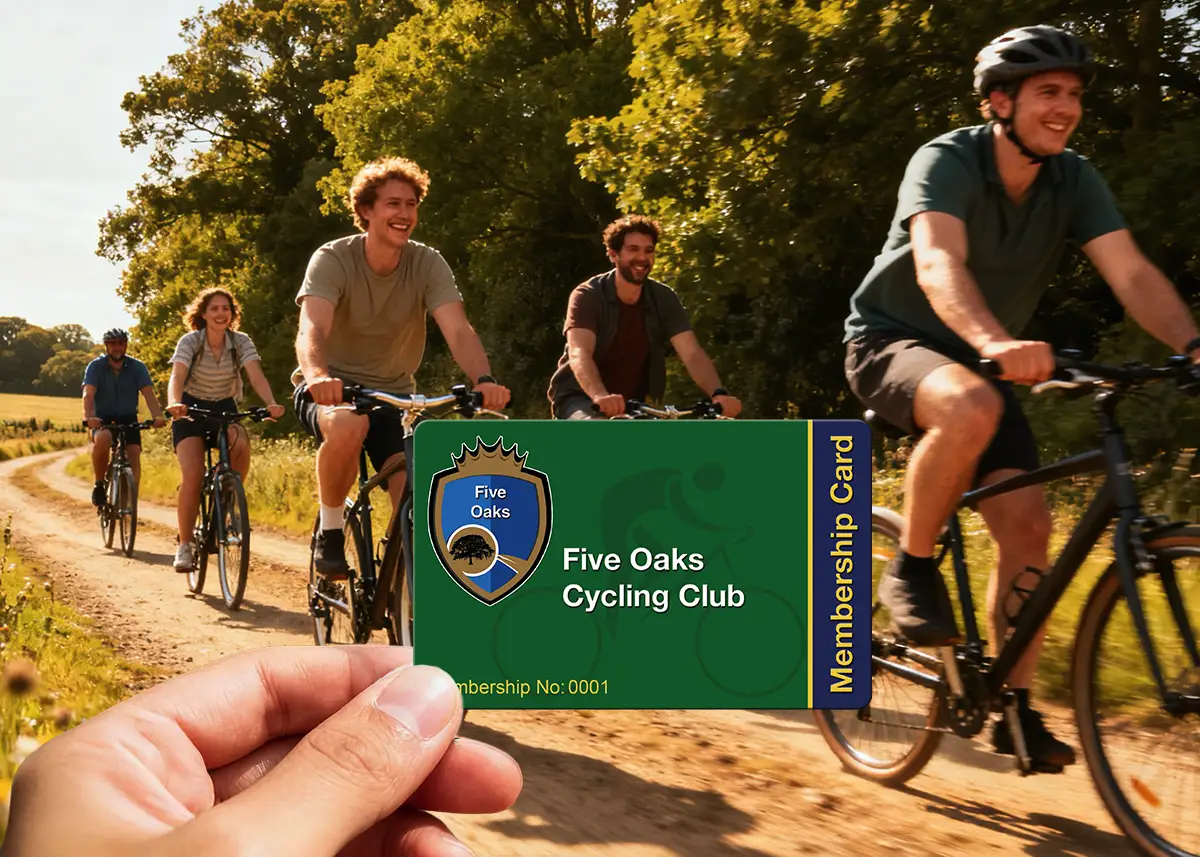
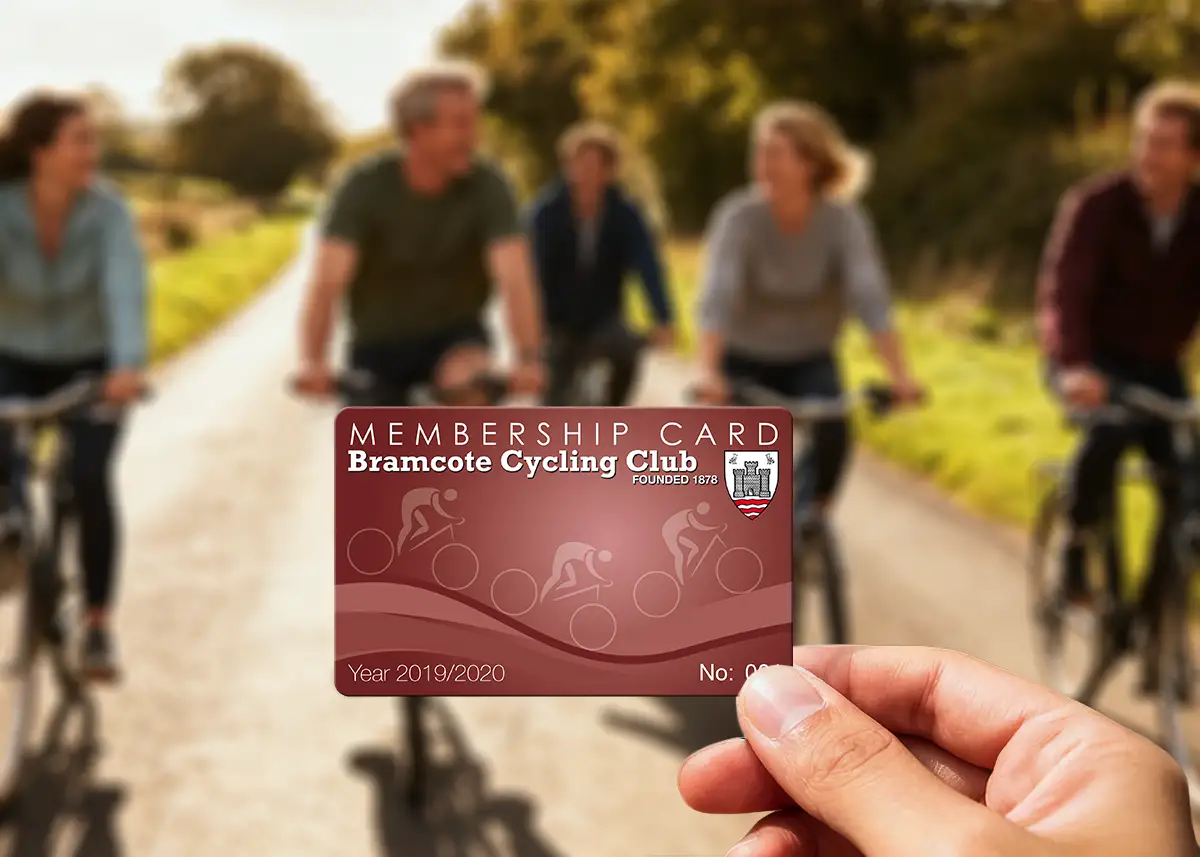
Cycling Club Membership Card Examples
The cycling club cards below almost all use kit
colours on the front — a club is its jersey, and members recognise the card
instantly.
What varies is the reverse. The best of them give the whole side to an emergency
contact in large type, with ride details squeezed around it rather than the other
way round. Send us your kit design and we will do the same.
Get your Quotation Now!

For a cycling club, the quote hinges on whether every card carries its own
emergency contact — and we would strongly encourage it.
That is variable data, priced as part of one production run rather than per card.
Tell us your membership number and whether marshals get a separate batch for the
club’s own events.
Quotes emailed within 10 minutes,
Monday to Friday, 9am – 5pm.
Design Service

Kit design but no card design?
Our Design Service bridges it
for just £29 +vat
Send us the jersey artwork or a photograph of the kit. We will pull the colours and
the club mark off it, build a card that is recognisably yours, and set the
emergency contact on the reverse at the largest size the space allows —
because a contact number that has to be squinted at has failed.
Proof by email before printing.
Artwork Fixing Service

Cycling clubs usually have good artwork, because kit suppliers need it —
which means the file you want probably already exists with whoever printed your
jerseys.
Ask them for the vector logo. If all you can get is a photograph of a jersey, our
artwork fixing service will redraw the mark from it for
just £10 +vat, along with the usual sizing and colour work.
Free Photorealistic Email Proof
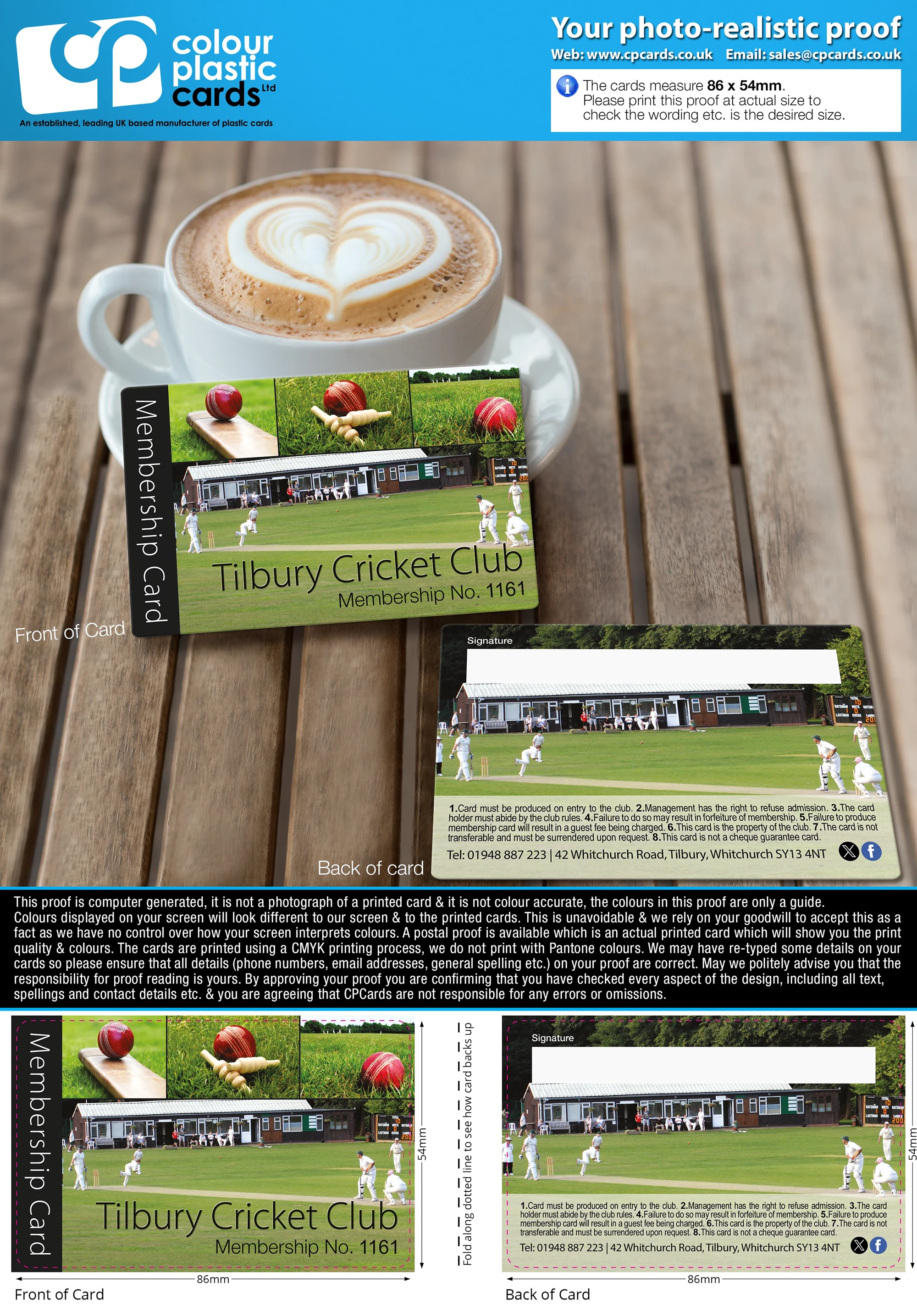
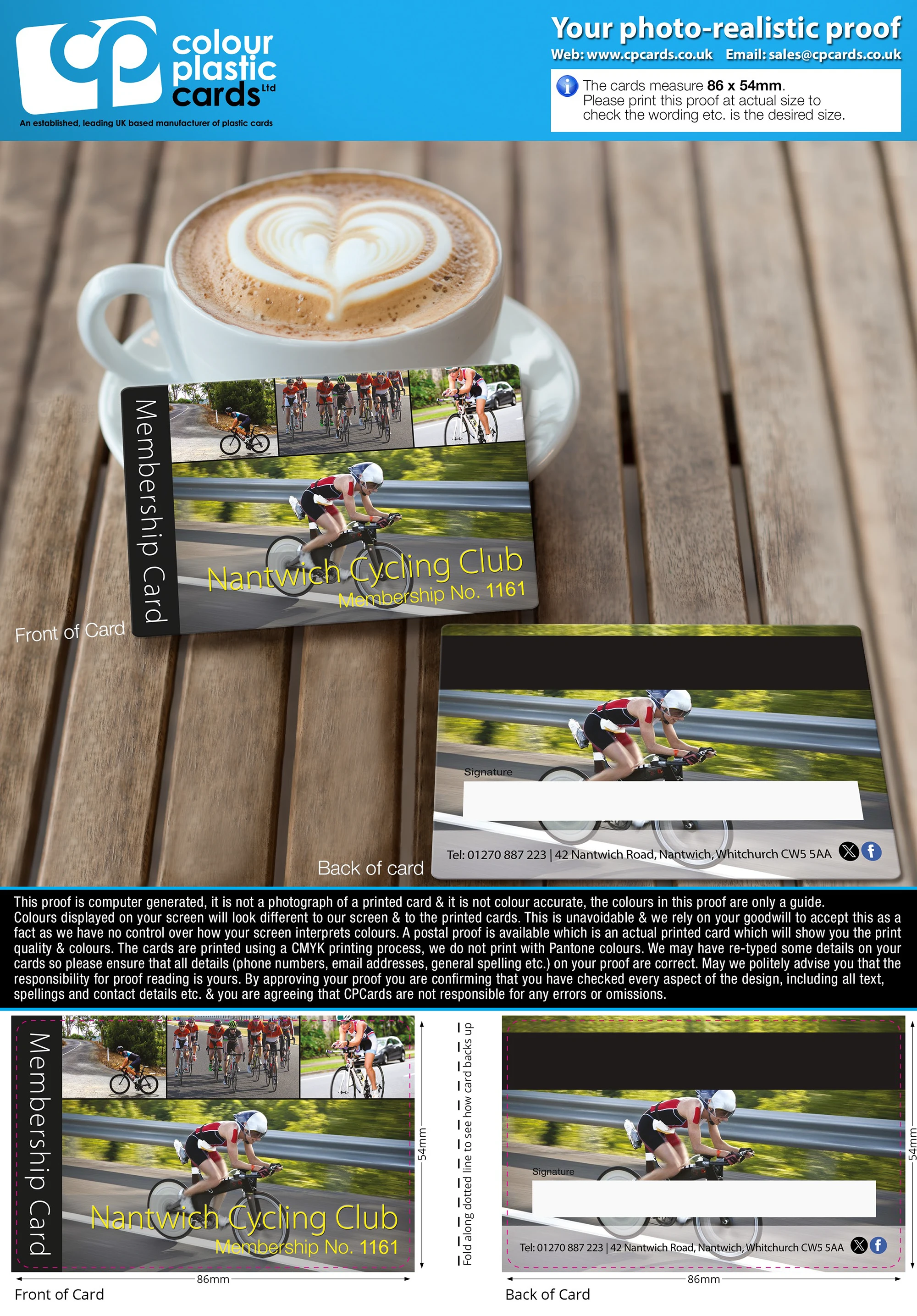
To give you complete confidence before we go to print, we’ll email you a
free, high-quality, computer-generated photorealistic proof of your full colour plastic Cycling Club membership cards.
This realistic mock-up shows how your finished Cycling Club membership cards will look, so you can check and approve the layout, text and overall design before production begins.
Fast Production Time


Club renewals usually land in the new year, ahead of the road season starting in
March, and the same cards then cover sportives and time trials through the summer.
Production is 7 working days from proof
approval, with a 3 to 4 working day express option (ask us for cost and availability),
printed in England.
January is the sensible month. Cards in hands before the first proper club run
means the emergency contacts are actually being carried when the weather is at its
worst.

Free Delivery

FREE DELIVERY anywhere in Great Britain,
whatever the quantity.
Cycling clubs rarely have premises — the meeting point is a car park or a
cafe — so cards go to a committee member at home and get handed out at the
start of a Sunday run.
Everything is sent in plain, unbranded packaging with no paperwork inside. Ask us
to split the order if marshals’ cards go to a different person.
Made in England

Kit colours are the point of a cycling club card, and kit colours are
exactly what drifts between print suppliers.
A card that is meant to match the jersey and comes back half a shade off is
immediately obvious to the people who wear the jersey every week. Printing every run
on the same press from the same stock is how the match holds from one year to the
next.
Your artwork stays on file for reorders.
Recyclable Material


Cycling clubs reissue annually against affiliation, so there is a card per member
per year going out and last year’s going in the bin.
Ours are solid PVC and can be recycled
where facilities accept PVC,
which the laminated cards they replace cannot.
Biodegradable cards print identically
and survive a jersey pocket just as well, if the club would rather.
Optional Extras
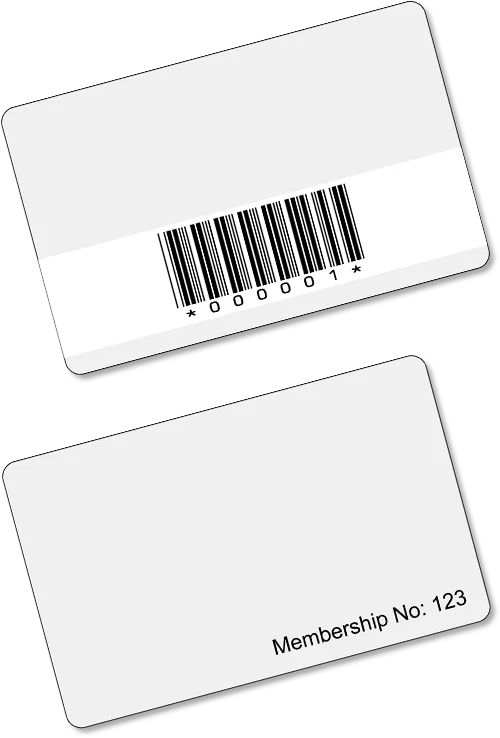
Two extras matter more than usual on a cycling card.
A punched hole lets marshals wear the card on a lanyard at the
club’s own events, where being identifiable at a junction is the entire job.
And a QR code — square, at least 15mm — pointing at
your ride calendar keeps the card short while letting the detail behind it change
weekly.
Barcodes handle clubhouse or cafe discounts.
Membership Card Specifications
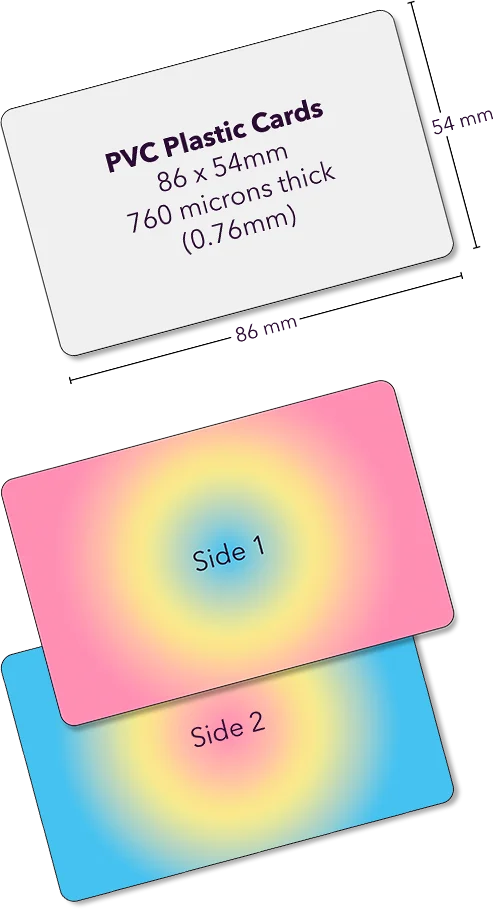
760-micron solid PVC,
Full Colour (CMYK)
on both sides at no extra cost, design
sealed beneath the surface — which is why
a card in a jersey pocket survives the wash.
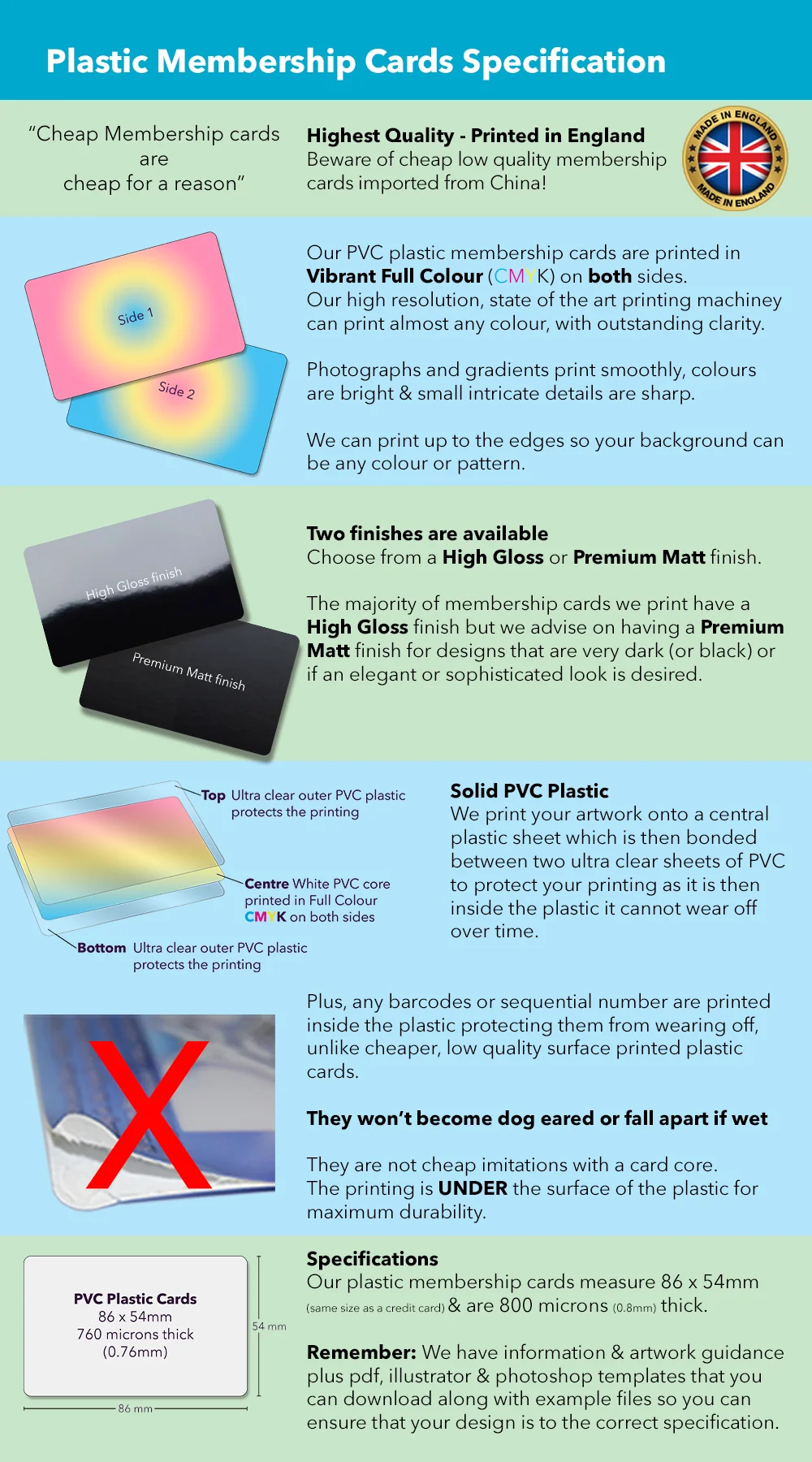
High gloss makes kit colours look right, which
is usually the priority here.
Premium matt adds £20 +vat if you prefer
a quieter finish.
Compare high gloss and premium matt.
Bureau Personalisation Service
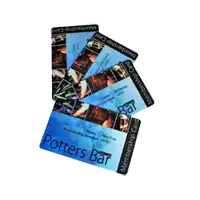
Riders join cycling clubs all year, often after turning up to a club run as a guest
— and a new member without a card is a rider with no emergency contact on
them.
Our Bureau Personalisation Service closes that
gap. We hold your printed stock and personalise cards on demand: email us the
details and we print and post
within 3 working days.
Given what the reverse of the card is for, that speed is worth having.
A Plastic Card to Approve
Ask for a printed card and then test the thing that matters: hand it to someone who
has never seen it and ask them to read the emergency number.
On a screen at 200% everything is legible. At actual size, in a hurry, by someone
who is not expecting it, is the only condition that counts — and it is
usually worth going a size larger than the design looked like it needed.
We will print one and post it.
Artwork Specifications & Guides
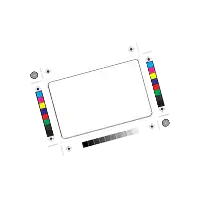
Two points from the guide for a cycling club card.
Design the reverse first. Decide how much space the emergency
contact needs, then fit ride information around what is left — not the other
way round.
Keep variable fields short. A long name plus a long contact name
plus a number still has to fit, so design for your longest member, not your average
one.
What our customers say
5.0 from 248 Google reviews
How to Order your Membership Cards

Normally the membership secretary, in January, as renewals come in — which is
convenient, because the renewal form is where the emergency contact details come
from.
Send the kit artwork and an Excel file with names, affiliation numbers and
emergency contacts. Approve the proof. Cards arrive before the season. We keep the
artwork, so next January is one email and a new file.
Cycling Club Membership card examples
Do you see a design that you like?
A cycling card below close to your kit?
Tell us which and we will build from it.
Clubs typically keep the structure — how the kit colours are used, how the
emergency contact is laid out on the reverse — and change the club name,
colours and pace-group coding. Included in the
Design Service.


Cycling Club Membership Card FAQs
Can cycling club cards show a rider's usual pace group?
Yes. It can be printed on the card, and many clubs go further and give each pace group its own card colour, which costs nothing extra since both sides print in full colour as standard.
Can cards confirm governing body registration for insurance purposes?
Yes. The registration number and the membership year can both be printed on the front. The card records the registration; it does not replace it.
Can marshals and event volunteers use the same card as ID?
Yes, and many clubs order a separate batch for them. A 5mm punched hole 6mm in from the edge lets the card hang from a lanyard so marshals are identifiable at a junction.
What's the minimum order?
25 cards, which suits a club ordering for its current membership or a one-off batch for an event.
Can each card carry that rider's own emergency contact?
Yes, and it is the most worthwhile thing you can do with a cycling club card. Supply an Excel file and every card is individually printed with its own rider's emergency contact name and number, at no extra artwork charge.
Will the card survive a wet ride, or the washing machine?
Yes to both. They are 760-micron solid PVC with the design sealed beneath the surface, so there is no laminate film for water to get behind. A card that goes through a wash comes out unchanged.
Can we link the card to our ride calendar?
Yes. A QR code, square and at least 15mm, can point at any page on your website, so you can change ride times and routes as often as you like without reprinting cards.
How big should the emergency contact be on the card?
As large as the space allows. We will lay it out for you as part of the design, and the usual approach is to give the whole reverse over to it rather than squeezing it in beneath other information.
Gallery of Cycling Club Membership Cards
Click on an image to see it larger