

Gift Card Examples
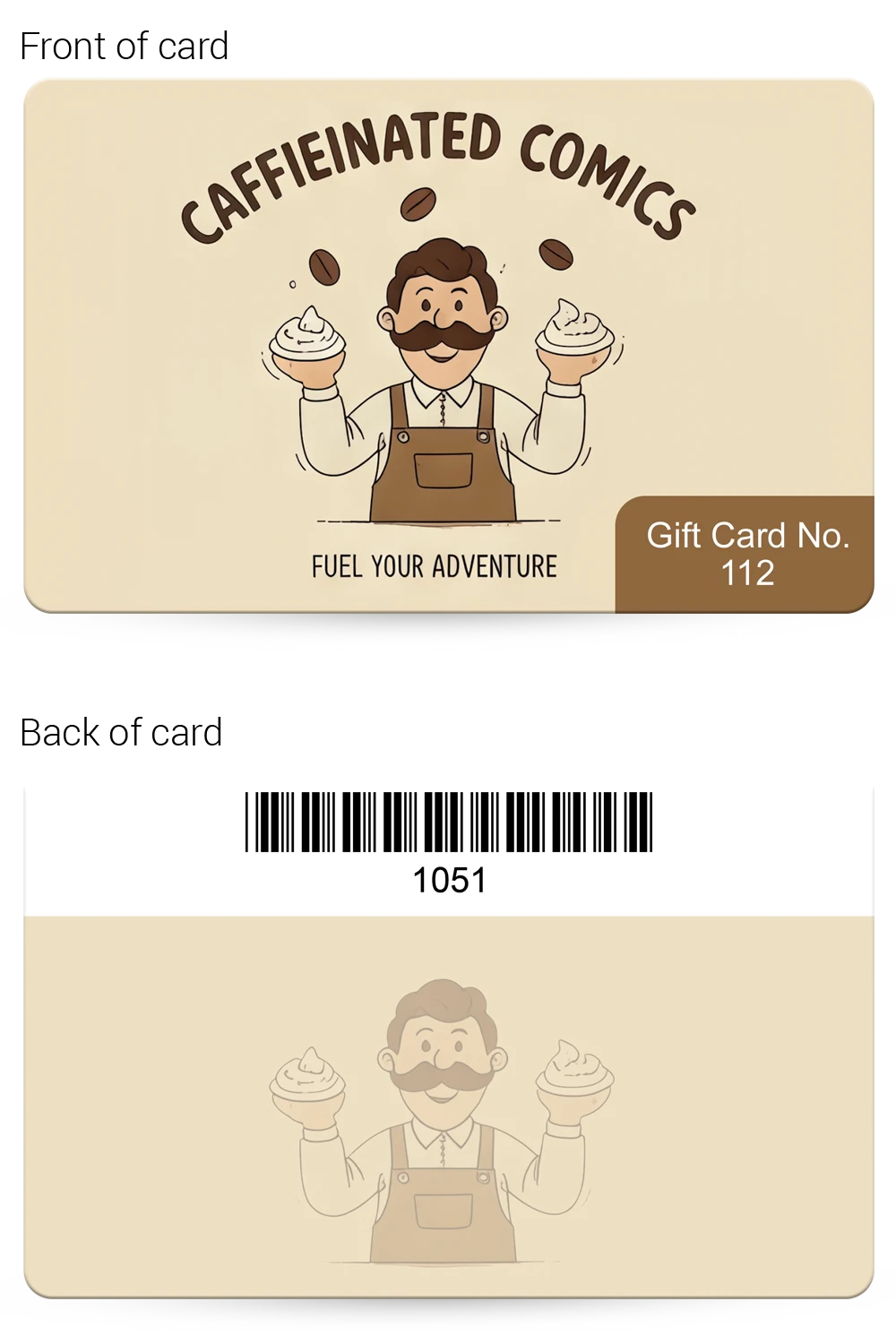
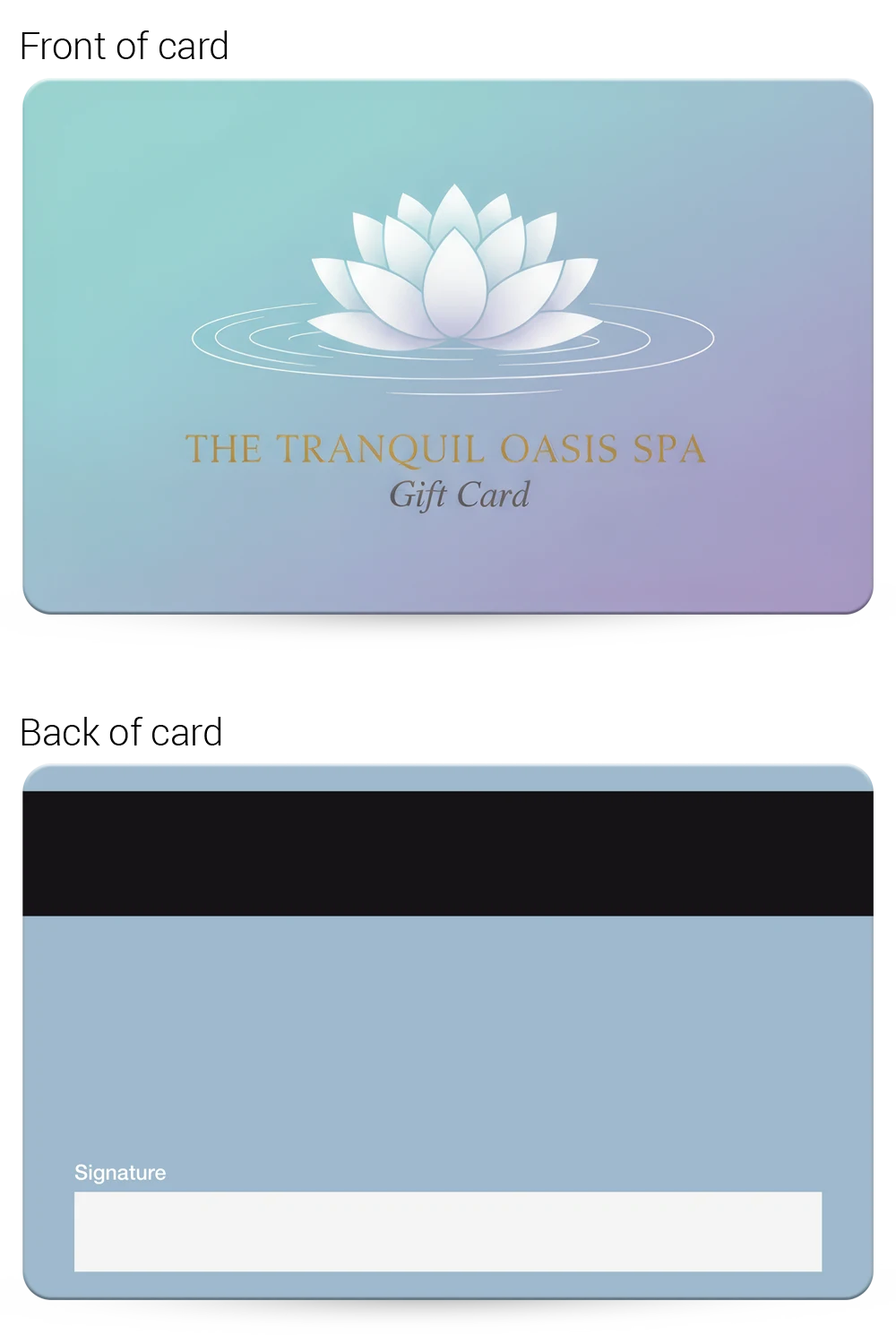
Gift cards are usually printed with a scratch-off or sealed PIN panel on the reverse for stored-value redemption at a till or online, and a barcode or magstripe for EPOS scanning. Retailers and salons commonly order them alongside a matching loyalty card design so gift and loyalty schemes share the same visual branding.
Do you see a design that you like?
Love one of our examples? Let’s use it as inspiration!
If you spot an example design that catches your eye, we can use it as a starting point to create your own design.
We’ll tailor the layout, colours, logos, and text to suit, all included as part of our Design Service.
Just tell us what you like and send over any logos and pictures, and we’ll do the rest.

Beauty Salons


Bowling

Car Wash & Valet


Cinemas


Coffee Shops




DIY Stores


Garden Centres

Hair Salons


Hotels


Nail Salons


Pet Shops


Restaurants


Spas




Theme Parks


A Gift Card Has Three Owners, Not One
This is what makes gift cards different from every other card on this site, and it is the thing the designs above are really solving. A membership card is issued to one person and used by that person. A gift card passes through three sets of hands: your staff sell or activate it, a customer buys it, and somebody else entirely walks in with it weeks later.
Each of those has a different requirement. Your staff need to be able to activate and redeem it quickly at a busy till, which means a barcode or magnetic stripe that reads first time. The buyer needs it to look like a present — this is the only card you will ever print whose job includes being handed over as a gift, so a thin voucher or a printed slip visibly undersells what they have just paid for.
And the recipient needs it to survive. A gift card often sits in a wallet for a month or two before it is used. Solid PVC, the same material and dimensions as a bank card, goes in a wallet and stays legible; a paper voucher goes in a drawer and gets forgotten, which is a redemption you never see and a customer who never comes in.
PINs, Scratch Panels and Numbering
How your till knows what a card is worth determines most of the technical spec. Where the value lives in your EPOS against a card number, a barcode or a magnetic stripe is all you need — barcodes in Code39, Code128 or EAN5, and magnetic stripes which we can either encode for you or supply blank for you to encode yourself.
Where a card carries a redemption code, a scratch-off panel is the right answer. A typical panel is 8mm x 75mm and conceals the code until the recipient scratches it off, which matters more than it sounds: a code visible on a rack of cards in a shop is a code anyone can photograph. The wording underneath is normally supplied in an Excel file so it differs on every card, and nothing can be printed on the panel itself.
Sequential numbering ties the whole scheme together. Give us a start number and the cards run on from it, or send exact numbers in a spreadsheet. Numbering can be printed in any CMYK colour, including one matched to a colour in your logo so it looks designed in rather than stamped on.
Why Small Businesses Run Gift Card Schemes
The commercial argument is straightforward and has nothing to do with print. A gift card takes the money now and delivers the service later, which is working capital arriving before the cost of providing anything. A proportion is also never redeemed at all.
Beyond that, a gift card brings a new customer through the door who did not choose you — somebody else chose you for them. For a salon, restaurant or independent retailer, that is one of the few genuinely new sources of first-time custom that does not cost advertising money.
Our minimum order is 25 cards from £75, with no setup fees and free UK delivery, which is deliberately low enough that a sole trader can test a scheme rather than commit to a thousand cards. If you want the card to arrive as a proper gift, our card carriers and wallets hold it in a printed folder rather than being handed over bare.
Most businesses order gift cards and loyalty cards in the same design so the two read as a set.
Gift Card Printing FAQs
What's the minimum order for gift cards?
25 cards, from £75, with no setup fees and free UK delivery included. That is deliberately low enough to test a scheme rather than commit to a thousand cards.
How does the till know what a gift card is worth?
Usually the value sits in your EPOS against a card number, read by a barcode or magnetic stripe. Where a card carries a redemption code instead, a scratch-off panel conceals it until use.
Why use a scratch-off panel?
Because a code printed openly on a card sitting in a shop rack can be photographed by anyone. A typical panel is 8mm x 75mm and hides the code until the recipient scratches it off.
Can every card have a different code?
Yes. Supply the codes in an Excel file and each card is printed with its own, whether that is a visible number, a barcode value or the wording hidden under a scratch panel.
Can you encode magnetic stripes for us?
Yes, we can encode them before shipping, or supply them blank so you can encode them yourself. This is different from our RFID cards, which are always supplied unencoded.
Are plastic gift cards better than paper vouchers?
For redemption rates, generally yes. A PVC card goes into a wallet and stays legible for the month or two before it is used; a paper voucher goes in a drawer and is often forgotten.
Can we get the cards in a presentation carrier?
Yes. Our card carriers and wallets hold the card in a printed folder, which matters when the card is being handed over as a present rather than pulled out of a pocket.
Can gift cards match our loyalty cards?
Yes, and most businesses do exactly that, ordering both in the same design so the pair reads as a set.