

Hot Foil Plastic Card Printing
Our translucent plastic cards are printed by a hot foil printing process. This page explains a little about the process and its history.
When you look at our range of products, the first thing that probably catches your eye is the precision, the depth of colour and the design versatility that we can produce. All of this is possible thanks to the technique we use to get our printing done: the hot foil stamping or printing process.
This process is gaining adherents day by day and with good reason, because the finish and elegance that we can achieve with this printing technique is simply stunning. Although the advancement of technology has made it possible to get 100% accurate results and to enable printing of virtually any design today, however complex, the process itself is not exactly new.
What Is Hot Foil Stamping / Printing?
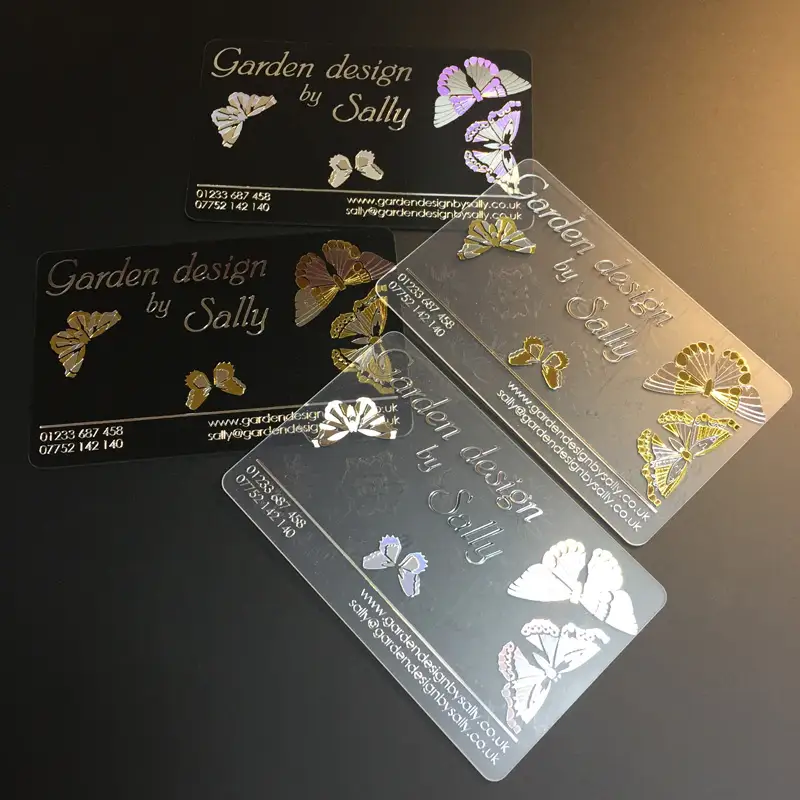
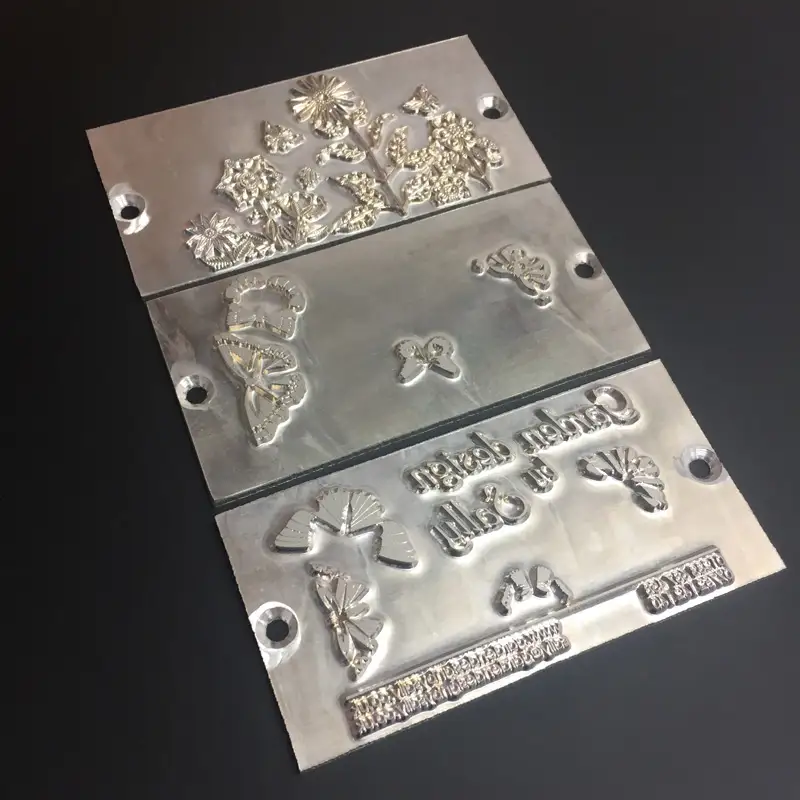
It is a special process that is used for printing onto different surfaces. The process requires heat and pressure as well as metal dies and foil. During printing, what happens is that the die (that has the design to be printed) comes in contact with the foil film. Thanks to the heat and pressure in force at this time, a wafer thin layer of the foil film is actually transferred onto the surface on which you need the print to appear. The metal plate or die is hot, and this ensures that the foil only sticks to the surface in the shape or form of the design that is on the plate or die.
Each individual colour is printed one colour at a time on one side at a time, and a different printing plate (die) is required for each colour printed on each side.
As you can see, this process is perfect for getting a stunning metallic finish on the surface, because it imparts a shiny, glossy print on it. At the same time, the print is not garish, because it reflects the true metallic nature of the foil itself and it is not artificially created through paint or dye. The limitation that many people assume comes with foil stamping or printing is that it works well only with metallic finishes — however, a wide range of pigment colours are also available.

The most commonly used foils are metallic shades like gold or silver, but this is only because this process yields such spectacular results with these, and such results are not easy to obtain with any other printing technique.
If you are familiar with the letterpress process or engraving, you will see that the hot foil stamping / printing process is quite similar. Here, too, the colour is applied onto the printing surface by exerting pressure over the die or metal plate with the design.
History of Hot Foil Stamping / Printing
This printing / stamping method can be traced back to ancient Egypt, although it has evolved quite a bit since then. Back in those days, the Egyptians used to hammer gold sheets until they became thin like foil, merely some 0.0001mm thick.
The gold foil was then used to decorate the pharaoh’s coffin, or the mummy itself, or also as jewellery for the royals. This can be said to be the first instance of foil stamping, although heat was not in the picture at this point.
Later, during the Middle Ages, machines were used in place of manual labour to create embossed designs on surfaces that were then embellished with gold foil. You will find that thin gold leaf covered bibles were the rage in those days, and the popularity of this decorative printing technique made it quite popular and widespread.
In the 19th century, right at the beginning, the technique underwent yet another transformation that brought it closer still to the present day method that we use. The printing was simplified now by affixing the gold foil to paper to create paper-foil rolls.
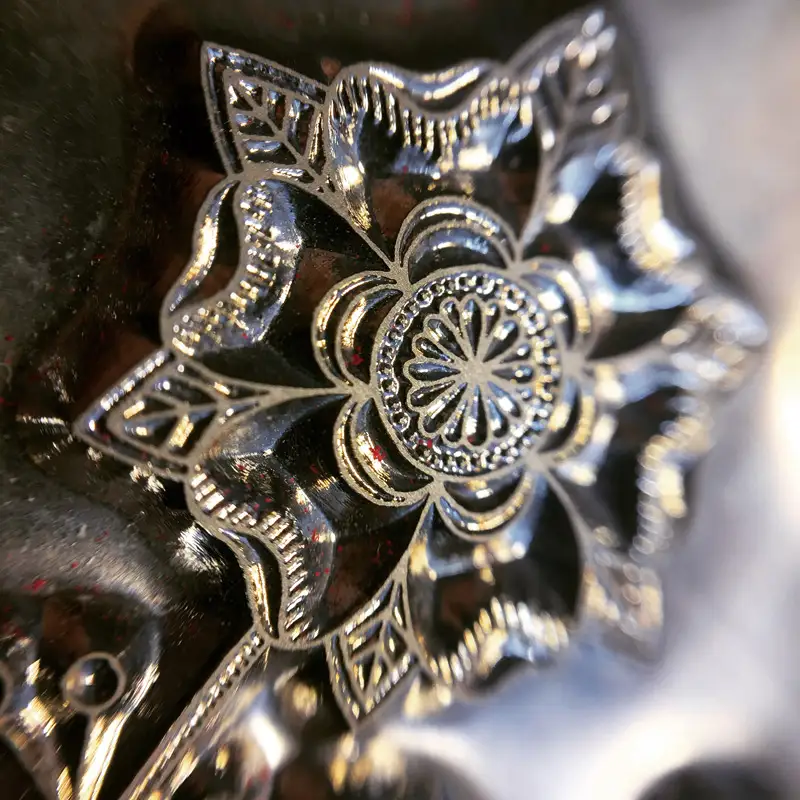
Heat began to be used now to make it easy to transfer the gold from the paper onto the printing surface, more efficiently and effectively. Not only was a better, more precise design created with gold, the gold foil was also affixed to the print surface better, thanks to the heat factor.
It is important to mention the name of Dr Ernest Oeser, who was the first to patent the gold and colour stamping foil in 1892. He used 23 carat gold powder or bronze powder along with dyes to get rich metallic shades in the output.
As the years went by and gold prices escalated, other, more affordable metals came to be used in the same way to create different metallic finishes. Other issues, such as the tarnishing of bronze, were also tackled by bringing in various other kinds of metals to get the printing done. Today, it is not just metals but also different hues that are transferred onto surfaces using hot foil stamping or printing.
Hot foil stamping may mean different things in different applications. The term is used to describe simple foil stamping, embossing along with foil stamping, holographic foil stamping, and also foil embossing on structural embossing.
About the Foil
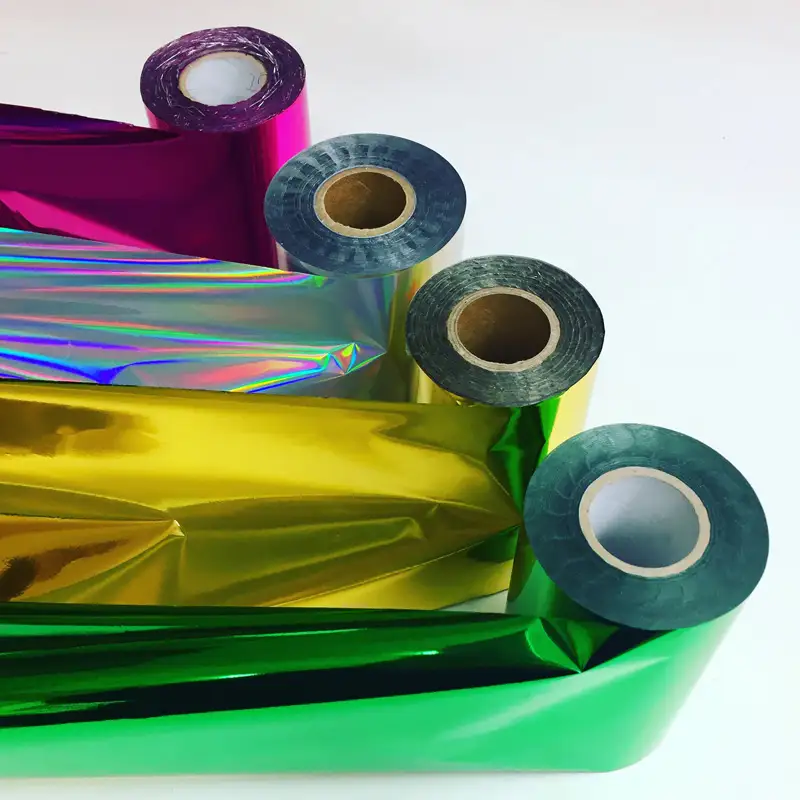
The foil used for hot stamping is made up of several layers that include a layer of adhesive. When the pressure is applied against the foil through the die and the heat acts upon the foil at the same time, the adhesive layer kicks into action and helps fix the foil onto the surface. Helping this along is the fact that the release layer is also melting at the same time.
The gloss pigment foil is, as the name suggests, very glossy and shiny while not giving a metallic sheen. If you want a more artistic, painted look, this is the one to choose. Holographic foil is also quite popular these days, with its unique effect and somewhat exotic look.
Foil stamping does not use any inks, so there is no question of a series of prints turning out with hue variances when you are printing in bulk, or of the print smudging.
The output brightness or colour of the metallic colours does not change depending on the plastic colour that you use, because the colour is totally opaque and rests on the surface of the plastic. If you need to print on vibrant metallic colours, foil stamping is the perfect choice.
Why We Use It
The shiny, glossy finish that foil stamping affords takes your prints to the next level in terms of audience appeal and visual impact.
The fact that hot foil stamping can give such brilliant results is why we use it in our plastic card printing business. It is a very impactful piece of printing that is sure to capture the attention of people and create a lasting impression in their minds.
This is why hot foil printing or stamping is a good idea for visiting cards: you want your brand or business name to stick in the minds of the people you hand these cards out to. With the ability to transpose virtually any kind of graphics onto the card with the stunning effect of foil stamping, you have a simple way to create visually stunning cards affordably and quickly. Talk to us today about what you need and we will design a card for you that will take your branding to new heights and help spread the word about your business and service in the marketplace.
Hot foil printing is used on our translucent frosted plastic cards, satin black plastic cards, metallic plastic cards, and white plastic cards.
See It Running
Two short films from the factory floor in England: the foiling itself, and the machine that does it.
Hot Foil Printing: Questions & Answers
-
What is hot foil printing?
Hot foil printing is a process where metallic foil or pigment colour is transferred onto a surface using heat and pressure via a metal die. The die is engraved with your design, pressed against the foil film, and the heat causes a thin layer of foil to bond permanently to the card surface in the exact shape of the design. -
Which plastic cards are printed by hot foil?
At CP Cards we use hot foil printing on our translucent frosted plastic cards, satin black plastic cards, and metallic plastic cards. It is the only process that produces true metallic results on these card types. -
What colours are available with hot foil printing?
We offer a wide range of metallic foils including gold and silver, vibrant pigment colours, and holoprint — a special foil that refracts light into a shifting rainbow of colours. Up to 4 colours can be printed per card. See the ink and foil colours page. -
Can gradients or photographic images be printed by hot foil?
No. Hot foil printing requires a solid design — gradients, tints, and photographic images cannot be reproduced by this process. For those requirements, our full colour CMYK plastic cards are the better choice. There is more on this in what hot foil cannot do. -
Is hot foil printing durable?
Yes. Because the foil bonds directly to the card surface under heat and pressure, the print is extremely hardwearing and resistant to scratching and fading. There is no ink to smudge or fade over time. -
What is the difference between metallic foil and pigment foil?
Metallic foils produce a shiny, highly reflective finish — gold and silver are the most popular. Pigment foils are glossy and vibrant but do not have a metallic sheen — they suit designs where a bold, solid colour is needed rather than a metallic effect. -
What is holoprint?
Holoprint is a holographic foil that refracts light into a shifting rainbow of colours as the card is moved and angled. It creates a striking, eye-catching effect and is popular on both frosted and satin black plastic cards. -
Can both sides of a card be hot foil printed?
Yes. Each side is printed separately, with a different die required for each colour on each side. This does add to production time but both sides can carry full hot foil designs.
Talk to Us About a Foiled Card

Tell us what you need and we will tell you whether hot foil is the right process for it — and if it is not, which of our card ranges is. Send your artwork over and we will check it is suitable before anything goes to print, free of charge.
Every order gets a proof before the full run is printed, so you can see exactly how the foil has landed. We typically reply to quote requests within 10 minutes during working hours.