
High Gloss v Premium Matt: Which Card Finish Do You Need?
Every full colour PVC card we print leaves the factory with one of two finishes on it. It is the last question on the order form, and it is the one customers ask us about most.
The short version: High Gloss makes colours stand out and look more vibrant, and it is included in your price. Premium Matt dulls the colours down, disguises surface scratches on dark cards and is easier to scan, and it adds £20 +vat to the order.
The question on the order formCard finish required — would you like a High Gloss or a Premium Matt finish?
The Two Finishes, Side By Side
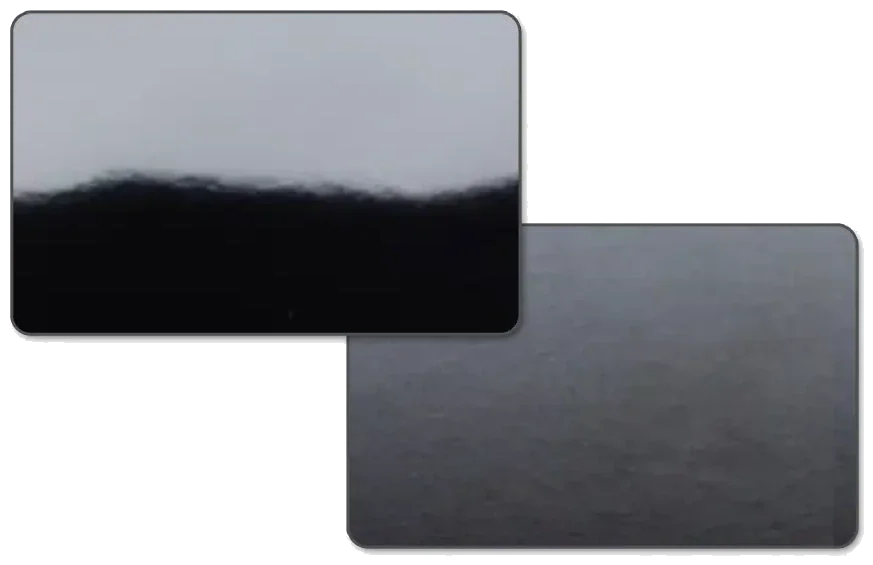
Both crops below come from one photograph of the same two cards, taken at the same distance under the same light. The only thing that differs is the finish on the card.
High Gloss
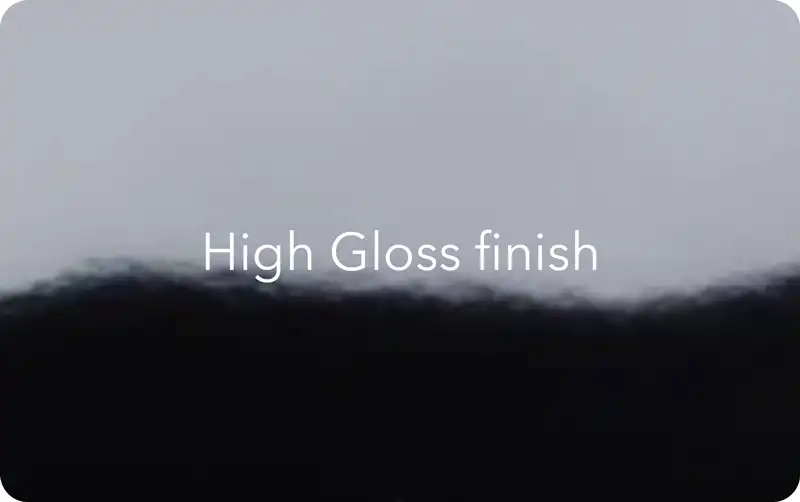
The gloss surface acts as a mirror — that pale band is the light above the card being reflected straight back.
Colours stand out and look more vibrant. It is the finish most people picture when they picture a plastic card, and it is the most popular choice by a wide margin.
Premium Matt
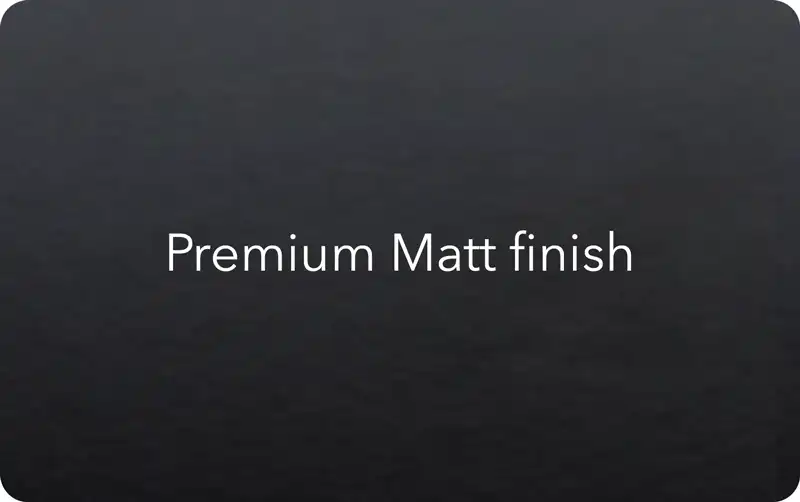
The same light, the same distance, the same card — scattered evenly instead of reflected, so there is no hot spot.
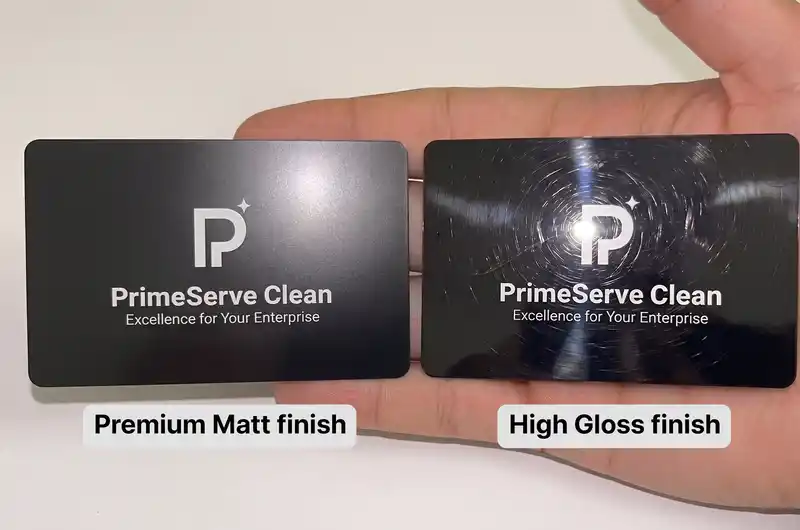
Colours are dulled down and the surface is flat and non-reflective. Usually ordered when the background is black or very dark, because matt disguises surface scratches.
High Gloss: the case for it
High Gloss is the default, and for most orders it is the right call. The finish is a clear, high-shine layer over the print, and what it does to colour is the whole point of it: reds get redder, blues get deeper, and photographs hold their contrast instead of flattening out.
- Colours stand out — gloss makes them more vibrant, which is what you want on a bright, photographic or brand-led design.
- It is the popular choice — the finish the overwhelming majority of our customers order, and the one most people expect a plastic card to have.
- It costs nothing extra — High Gloss is included in the price we quote you.
- It reads as new — a fresh gloss card has an obvious shine to it, which matters on gift cards, promotional cards and anything handed over as part of a first impression.
The one thing to know before you choose it: on a black or very dark background, a gloss surface is a mirror, and every scuff a card picks up in a wallet interrupts that mirror and catches the light. The card is no more fragile than a matt one — the marks are simply much easier to see.
QR codes and barcodes scan better on matt
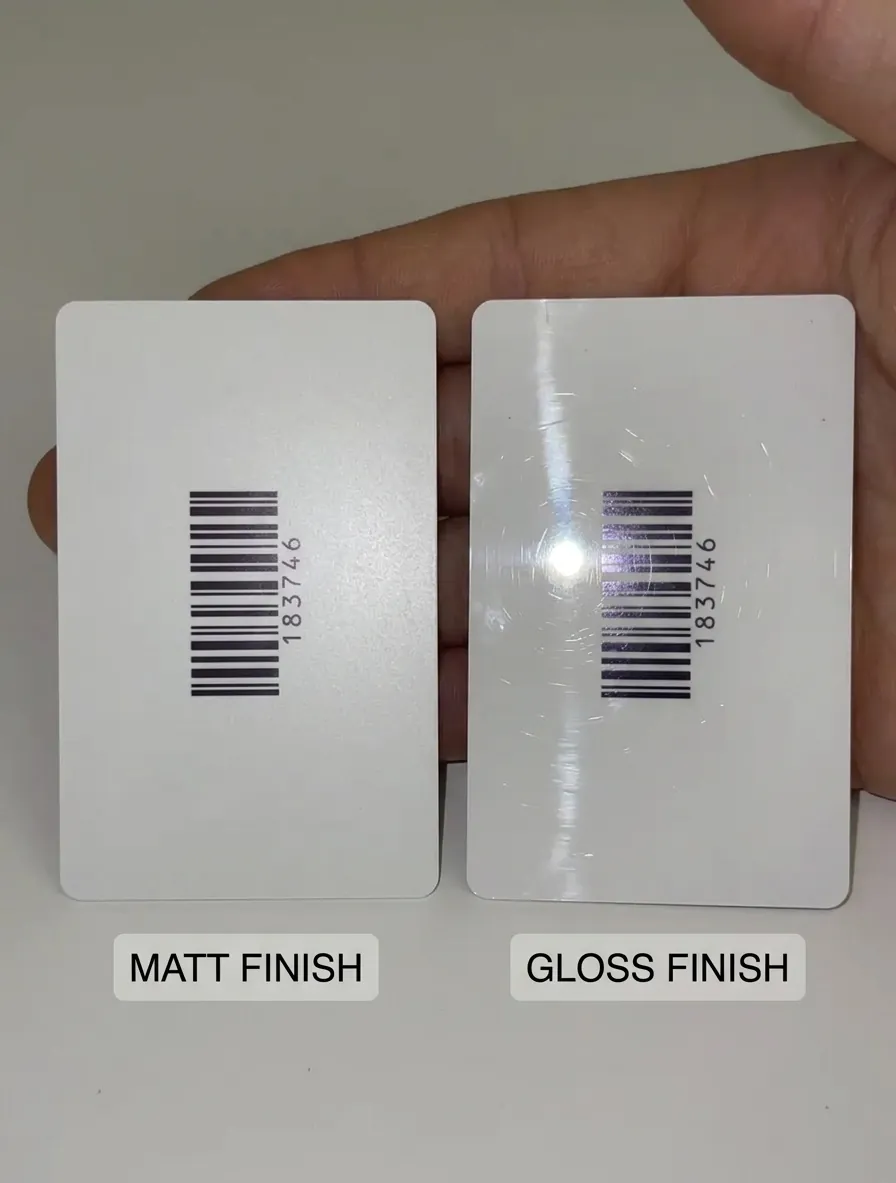
If your card carries a QR code, this is often the deciding factor. A QR code printed on a matt card is almost always easier and faster to scan than the same code on a gloss card, and the reason is simply what each surface does with light.
Why matt is better for scanning
- Less glare — a matt surface scatters light instead of reflecting it. A gloss surface bounces overhead lights, windows and phone flash straight into the lens, washing out the contrast the code depends on.
- No angle restrictions — a matt card can be scanned quickly from a range of angles, with no tilting the card back and forth to dodge a reflection.
- Better focus — phone cameras and laser scanners lock focus much faster on the sharp, non-reflective contrast of a matt surface.
Where gloss causes problems
- Bright environments — under strong retail lighting, office fluorescents or direct sunlight, glossy plastic acts like a mirror and can stop a phone reading the code at all.
- High-throughput use — on access control, event check-in or loyalty scanning, where cards are presented one after another, the slightest glare turns into queues and repeated read failures.
None of this means a QR code cannot work on a gloss card — thousands do. It means that if scanning is the card's main job, and particularly if it will be scanned under bright or uncontrolled lighting, the £20 for Premium Matt buys you a measurable reduction in failed reads. There is more on code setup on our QR codes on plastic cards page.
What each one costs
| High Gloss | Premium Matt | |
|---|---|---|
| Price | Included in your price | £20 +vat added to the order |
| Effect on colour | Colours stand out, more vibrant | Colours dulled down, softer |
| Surface | High shine, reflective | Flat, non-reflective |
| Scratches on dark backgrounds | Show clearly | Disguised |
| QR codes and barcodes | Can glare under bright light | Easier and faster to scan |
| Applied to | One or both sides | One or both sides |
| How often it is ordered | The most popular choice | Chosen for a specific reason |
The £20 is per order, not per cardPremium Matt costs the same £20 +vat whether you are ordering 100 cards or 5,000, so it gets proportionally cheaper the more you order.
See the difference
Still photographs can only do so much with a finish. This is the two of them moving under a light — watch the gloss card throw a highlight across itself as it turns, and the matt card stay flat.
Better still, hold them: order a sample pack and you will get printed cards in both finishes to compare under your own lighting.
Questions & Answers
-
Which finish is more popular?
High Gloss, by a wide margin. It is the finish most people picture when they picture a plastic card, it makes colours stand out and look more vibrant, and it is included in the price.
If you have no particular reason to choose otherwise, choose High Gloss.
-
How much does a Premium Matt finish cost?
Premium Matt is an additional £20 +vat on the order. High Gloss is included in your quoted price at no extra cost.
The £20 is a one-off charge on the order, not a per-card charge, so it costs the same whether you are ordering 100 cards or 5,000.
-
Does a matt finish really hide scratches?
It disguises them, rather than preventing them.
A gloss surface is a mirror, so any scuff on it breaks the reflection and catches the light — which is why scratches show up so clearly on a black gloss card. A matt surface scatters light in every direction already, so a scratch has far less to interrupt and is much harder to see.
The card is no more scratch-resistant. The marks are simply less visible.
-
Is a QR code easier to scan on a matt or a gloss card?
Matt, almost always. A gloss surface reflects overhead lights, windows and phone flash straight back into the camera or scanner, washing out the contrast the code depends on.
A matt surface scatters that light instead, so the code can be read from a range of angles without tilting the card to dodge a reflection, and cameras and laser scanners lock focus on it faster.
-
Will a matt finish change the colours on my card?
Yes, slightly. Premium Matt dulls colours down compared with High Gloss — the same artwork prints a little softer and less saturated.
That is exactly what you want on a dark or understated design and exactly what you do not want on a bright, photographic one. Choose the finish before you finalise the artwork, not after.
-
Can I have gloss on one side and matt on the other?
Yes. Each side can take either finish, so you can have High Gloss on one side and Premium Matt on the other.
That suits a card whose two sides have different needs — a bright, photographic front in High Gloss and a back carrying a barcode or QR code in Premium Matt, for instance, so the colours stay vibrant and the code still scans cleanly.
-
Can I see the two finishes before I order?
Yes. Order a sample pack and you will receive printed cards in both finishes to compare in your own hands and under your own lighting.
That tells you more in ten seconds than any photograph on a screen.
Ready to order?
Every full colour order comes with a free photorealistic proof before we print, so you can see the artwork signed off before anything goes on press.
Tell us which finish you want when you ask for a quote — or ask us, and we will tell you which one we would use for your design.