

Discount Card Examples
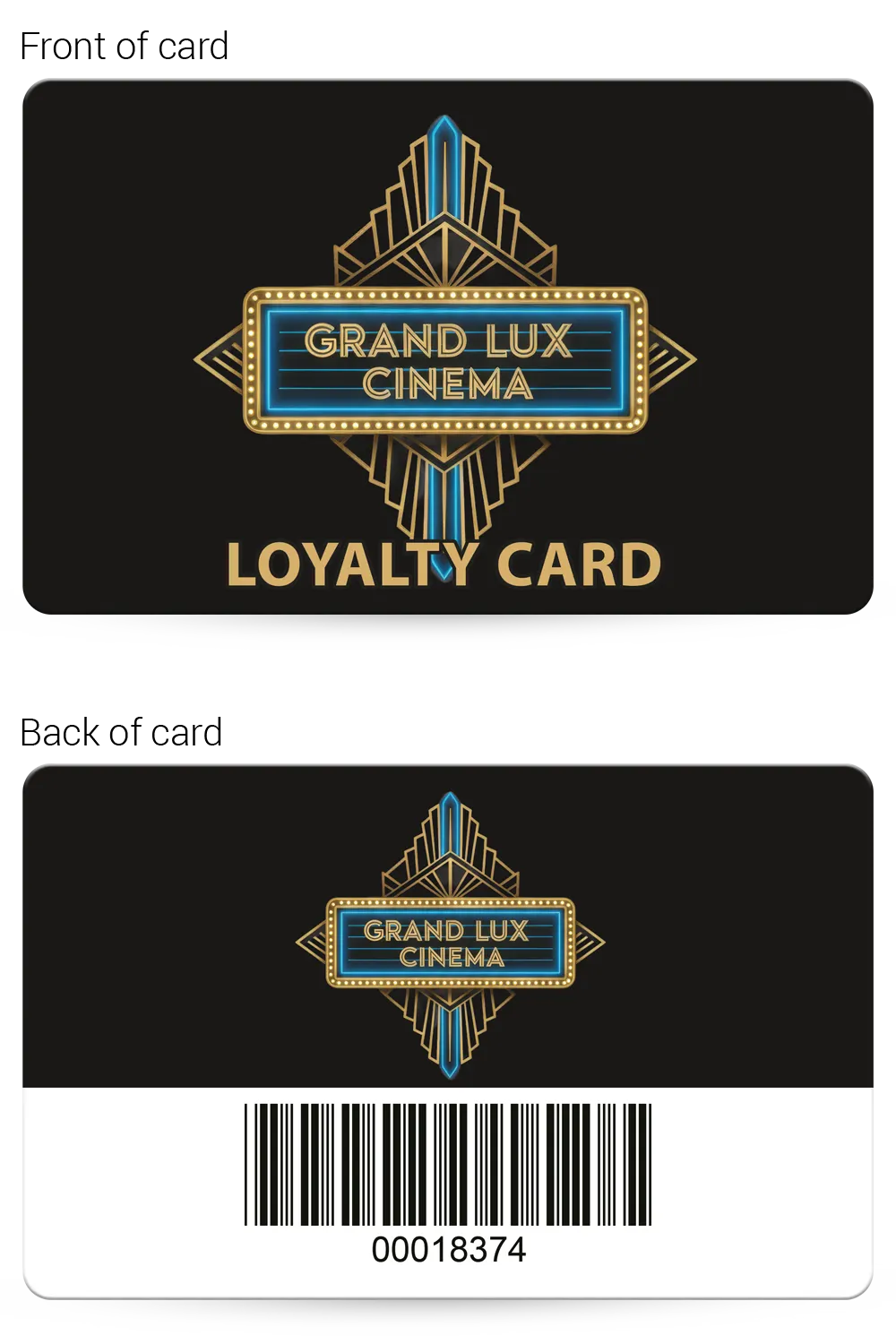
Discount cards are usually printed with a barcode, QR code or magnetic stripe so the till can identify the holder and apply the right rate, and with sequential numbering that ties each card to an individual account. Retailers and trade counters commonly order them alongside a matching loyalty card design so both schemes share the same visual branding.
Do you see a design that you like?
Love one of our examples? Let’s use it as inspiration!
If you spot an example design that catches your eye, we can use it as a starting point to create your own design.
We’ll tailor the layout, colours, logos, and text to suit, all included as part of our Design Service.
Just tell us what you like and send over any logos and pictures, and we’ll do the rest.

Beauty Salons


Bowling

Car Wash & Valet


Cinemas




Coffee Shops


DIY Stores


Garden Centres

Hair Salons


Hotels


Nail Salons


Pet Shops


Restaurants


Spas


Theme Parks


The Card Is the Entitlement, So It Has to Be Checkable
This is what separates a discount card from the other cards on this site, and it is the thing the designs above are really solving. A loyalty card records what somebody has already spent. A membership card says who somebody is. A discount card is a standing claim on your margin — every time it comes out of a wallet it costs you money — so the question it has to answer at the counter is not simply “who is this?” but “is this card still entitled, and entitled to what rate?”
That puts two demands on the design. The first is identification your staff can act on in a couple of seconds at a busy till: a barcode or QR code scanned into your EPOS, a magnetic stripe swiped, or a number on the front clear enough to be read and typed in. The second is the terms. Where a scheme is a single flat rate, printing “10% off” on the card settles an argument before it starts; where rates vary by account, or the figure is likely to change, leave it off the card and hold the rate in your system against the card number instead.
The awkward case is the card meant to belong to one named person — staff, students, trade accounts, blue-light and NHS schemes. A discount card is worth money to whoever is holding it, so a non-transferable card needs something that makes that stick: a signature panel, a printed name, or a photo, and usually an expiry date so the scheme comes back through your hands at a known point rather than running on indefinitely.
Numbering, Barcodes and Expiry Dates
How your till recognises a card determines most of the technical spec. Where the entitlement sits in your EPOS against a card number, a barcode or a magnetic stripe is all you need — barcodes in Code39, Code128 or EAN5, and magnetic stripes which we can either encode for you or supply blank for you to encode yourself. A QR code suits a scheme checked on a phone or through a web lookup rather than at a fixed till.
Sequential numbering ties the whole scheme together. Give us a start number and the cards run on from it, or send exact numbers in a spreadsheet. Numbering can be printed in any CMYK colour, including one matched to a colour in your logo so it looks designed in rather than stamped on. Once every card carries its own number you can cancel one lost card instead of reissuing a batch, and you can see which cards are being used and which never were.
Anything that differs from card to card — a holder's name, an account code, a branch, a discount tier, an expiry date — is supplied in an Excel file and printed on each card individually. That is the same variable-data process behind the numbering, so a staff card carrying a name and a date costs no more to produce than a plain one.
Why Businesses Run Discount Card Schemes
The commercial argument is different from a loyalty scheme's, and it is worth being clear about which one you are running. A loyalty card pays out after the spend has happened. A discount card gives the margin away up front, in exchange for the holder choosing you rather than the business next door — and choosing you again without needing to be reminded. It is one of the cheapest ways to buy repeat custom from a group you have already identified: trade accounts, staff, students, local employers, members of a club.
Because the value is fixed and visible, the discipline sits in the edges rather than the design — who qualifies, at what rate, for how long, and how you stop a card when somebody leaves or an account closes. Sequential numbering and a printed expiry date do most of that work for you.
Our minimum order is 25 cards from £75, with no setup fees and free UK delivery, which is deliberately low enough to run a scheme for a single trade counter or one intake of staff rather than committing to a thousand cards.
Most businesses order discount cards and loyalty cards in the same design so the two read as a set, and where the card also has to identify someone as belonging to an organisation, look at membership cards.
Discount Card Printing FAQs
What's the minimum order for discount cards?
25 cards, from £75, with no setup fees and free UK delivery included. That is deliberately low enough to run a scheme for one trade counter or one intake of staff rather than commit to a thousand cards.
Should the discount be printed on the card?
Only where it is a single flat rate that is not going to change — then printing “10% off” on the card settles an argument before it starts. Where rates vary by account, or the figure is likely to move, leave it off and hold the rate in your EPOS against the card number.
How does the till recognise a discount card?
By a barcode or QR code scanned into your EPOS, a magnetic stripe swiped, or a card number read off the front and typed in. The entitlement itself sits in your system against that number.
Can every card have its own number?
Yes. Give us a start number and the cards run on from it, or send exact numbers in a spreadsheet. Individual numbering lets you cancel one lost card rather than reissuing the batch.
How do we stop a card being passed on to someone else?
For a card meant to belong to one person, a signature panel, a printed name or a photo makes it non-transferable, and an expiry date brings the scheme back through your hands at a known point.
Can you encode magnetic stripes for us?
Yes, we can encode them before shipping, or supply them blank so you can encode them yourself. This is different from our RFID cards, which are always supplied unencoded.
Can each card carry a different name or expiry date?
Yes. Supply the details in an Excel file and each card is printed with its own — a holder's name, account code, branch, discount tier or date. It is the same variable-data process as the numbering, so it costs no more than a plain card.
Can discount cards match our loyalty cards?
Yes, and most businesses do exactly that, ordering both in the same design so the pair reads as a set.