

Hotel Key Card Examples
Hotel key card design ideas
Hotel key cards need to match the guest's room lock system — most commonly magstripe or RFID/NFC — so the card format must be confirmed against the property's existing door hardware before ordering. Many hotels also print their logo and a do-not-disturb or checkout-time reminder on the reverse, and some add the room number area as a write-on strip for reception staff.
Do you see a design that you like?
Love one of our examples? Let’s use it as inspiration!
If you spot an example design that catches your eye, we can use it as a starting point to create your own design.
We’ll tailor the layout, colours, logos, and text to suit, all included as part of our Design Service.
Just tell us what you like and send over any logos and pictures, and we’ll do the rest.

Matching the Card to Your Door Locks
Before anything else, the card has to open the room. Hotel key cards are either magnetic stripe or RFID, and the format has to match the lock hardware already fitted to your doors — there is no universal key card.
We supply cards for the systems most commonly found in UK properties, including Assa Abloy VingCard, Salto, Onity, Saflok, Kaba, Dormakaba, TESA, ISEO, Allegion (Schlage) and Mifare. If your locks are on that list we can almost certainly supply, and if they are not it is still worth asking.
The quickest way to get this right is to take one of the key cards you are using now and tell us what is printed or embossed on it, along with the name of whoever installed or services your locks. That is usually enough for us to identify the format. Confirming it costs you five minutes; getting it wrong costs you a print run and a very awkward first night.
The Most-Handled Piece of Print in the Building
Think about how much time a key card spends in a guest’s hand. It is the first thing they are given at check-in and the last thing they hand back. Between those two moments they take it out, tap it, pocket it and find it again several times a day, every day of their stay. No brochure, no tent card and no menu gets anything close to that much attention.
Most hotels use one side for the brand — logo, a photograph of the property, the name — and treat the reverse as wasted space. It is not. Printing both sides costs the same, and the reverse is arguably the more valuable of the two because it is what a guest reads while standing at their door.
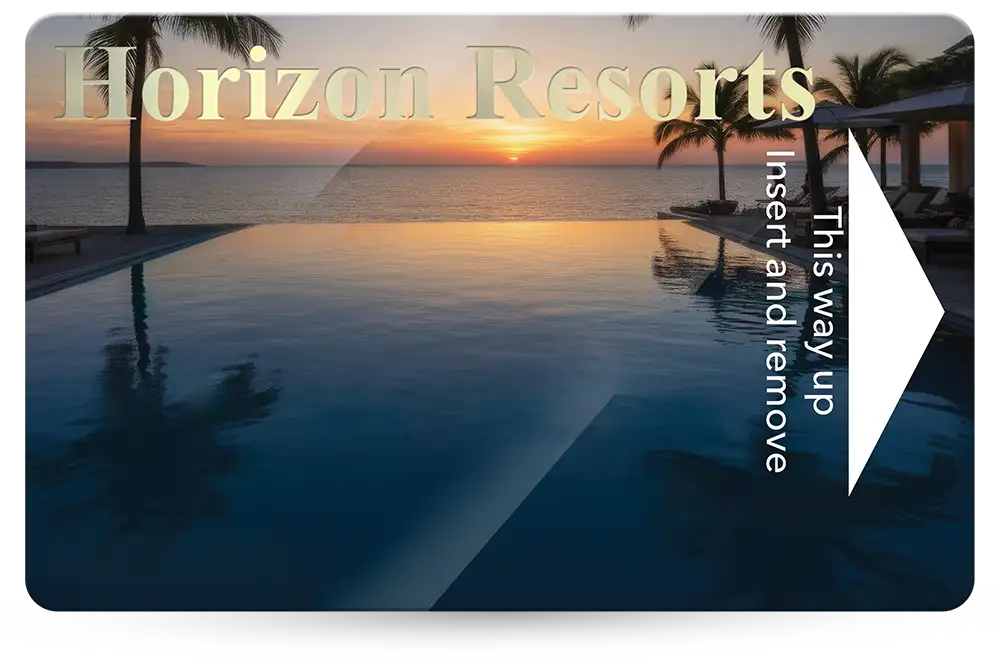
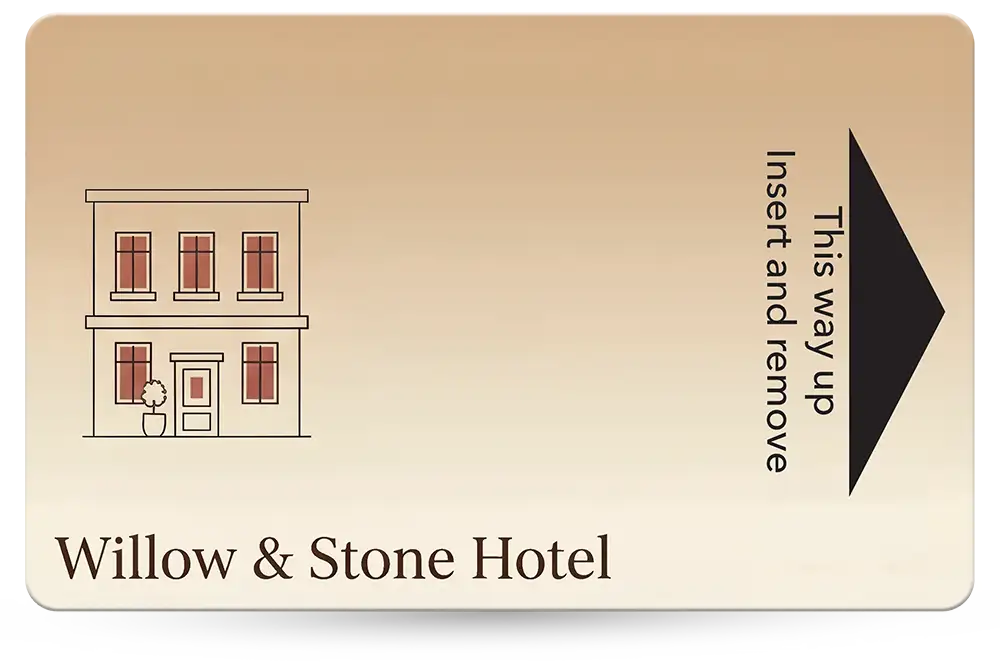
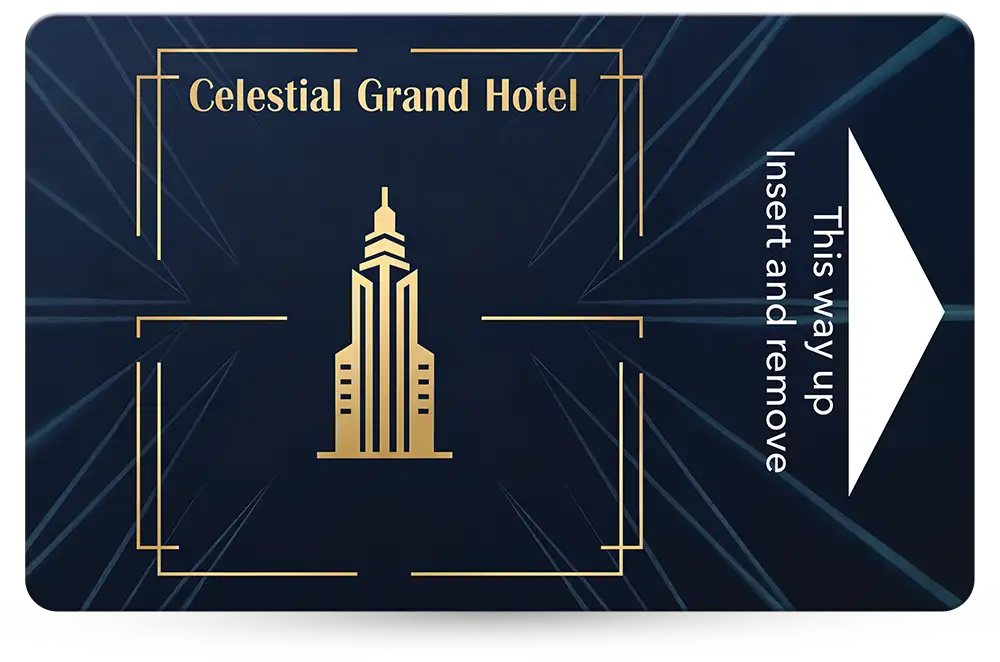
The examples above show the range, from the very plain to full-bleed photography. What they have in common is that the front works at a glance: a guest fishing a card out of a pocket in a dim corridor should know instantly which way round it goes.
What to Put on the Reverse
The wifi network and password is the single most requested thing, and the one that saves reception the most calls. Breakfast times come second. After that: restaurant and bar hours, spa or leisure opening times, the checkout time, and the number to dial for reception from the room.
A do-not-disturb reminder or a towel-reuse note fits well here too, and some properties add a write-on strip so reception can pencil in the room number — useful, though worth being deliberate about, since a card with the room number on it is a security consideration if it is lost.
The one with a measurable return is a prompt to book direct next time. A guest who found you through a booking site and rebooks through your own website saves you the commission on that entire stay, and the key card is the one piece of your marketing that is physically in their hand for several days. A short line and your web address costs nothing to add to a side you are printing anyway.
Turnaround is typically around 7 working days from artwork approval, and every card is manufactured here in England.
Hotel Key Card FAQs
Which hotel lock systems do you supply cards for?
Including Assa Abloy VingCard, Salto, Onity, Saflok, Kaba, Dormakaba, TESA, ISEO, Allegion (Schlage) and Mifare. If your system is not listed it is still worth asking.
How do I find out which key card format we use?
Take one of the cards you use now and tell us what is printed or embossed on it, plus who installed or services your locks. That is normally enough for us to identify the format.
Are hotel key cards magnetic stripe or RFID?
Both exist and it depends entirely on your door hardware. The card format must match the locks already fitted, so this needs confirming before you order rather than after.
Is printing the reverse extra?
No, both sides cost the same. The reverse is arguably the more valuable side, because it is what a guest reads standing at their door.
What do hotels usually print on the back?
Wifi network and password first — it saves reception more calls than anything else — then breakfast times, restaurant and bar hours, checkout time and the reception extension.
Should we put the room number on the card?
Some properties add a write-on strip for it. Be deliberate about it: a lost card with a room number on it is a security consideration, which is why many hotels leave it off.
Can the key card help us win direct bookings?
It is one of the few pieces of hotel print physically in a guest's hand for days. A short line and your web address on a side you are already printing is the cheapest direct-booking prompt you have.
How long do hotel key cards take?
Typically around 7 working days from artwork approval. Every card is manufactured here in England, so there is no overseas shipping in that timeline.