
Portrait or Landscape Cards?
Landscape is the way most plastic cards are designed, because that’s how a wallet holds them. Portrait suits a card that hangs from a lanyard or carries a photo of the holder. Both are the same card, at the same price; the difference is how it will be used.
This guide compares the two, shows where holes, slots and magnetic strips go on each, and explains how to set up portrait artwork.
The short versionLandscape for cards that live in a wallet: loyalty, gift, business and membership cards. Portrait for cards that hang from a lanyard or carry a photo: staff ID, event and visitor passes. A slot in the short edge hangs a card portrait; a magnetic strip always runs along the long edge.
Portrait and landscape at a glance
It’s the same card either way: 86 x 54mm, the size of a bank card, printed at the same price. The orientation is simply which way up you design it. That choice changes how the card is held, where a slot or magnetic strip can go, and how much room each line of text gets.
| Landscape | Portrait | |
|---|---|---|
| Size | 86mm wide, 54mm tall | 54mm wide, 86mm tall |
| How it’s usually held | In a wallet or purse, or handed across a counter | On a lanyard or clip, or shown at a door |
| Long lines of text | Room for an email address on one line | Shorter lines; long addresses may need to wrap |
| Photographs of people | Fit beside the text | Fit naturally above the name |
| Magnetic strip | Across the top of the back | Down one side of the back |
| Best for | Loyalty, gift, business, membership and discount cards | Staff ID, event and VIP passes, volunteer and visitor cards |
| Stands out? | It’s what people expect | Yes: most cards in a wallet are landscape |
When landscape works best
Landscape is the way most plastic cards are designed, and for good reasons. Wallets and purses hold cards landscape, so the design reads the right way up every time it’s taken out. Long lines such as an email address or a website fit on one line, and card readers that swipe a magnetic strip expect a landscape card.
- Loyalty and gift cards that live in a wallet
- Business cards, where the contact details are the point
- Membership cards that are swiped or scanned
- Any card with a wide logo or a landscape photograph
When portrait works best
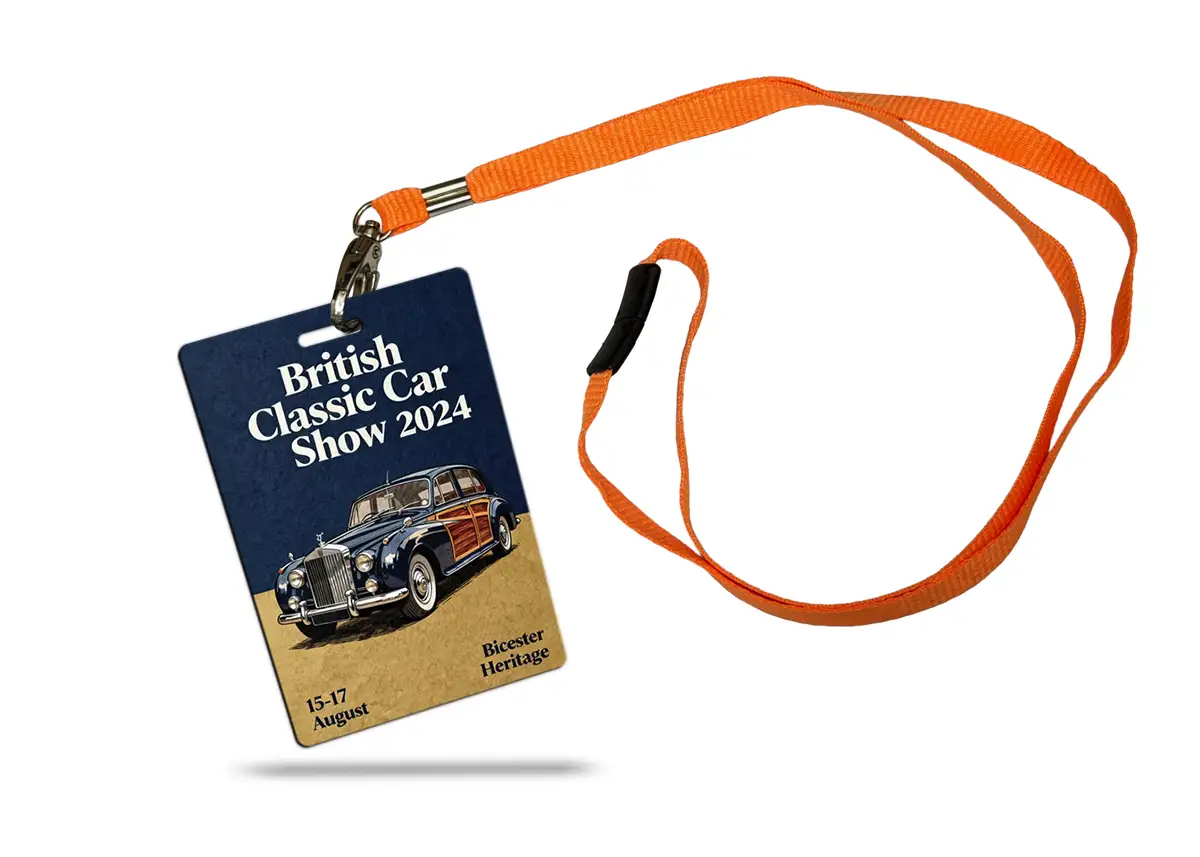
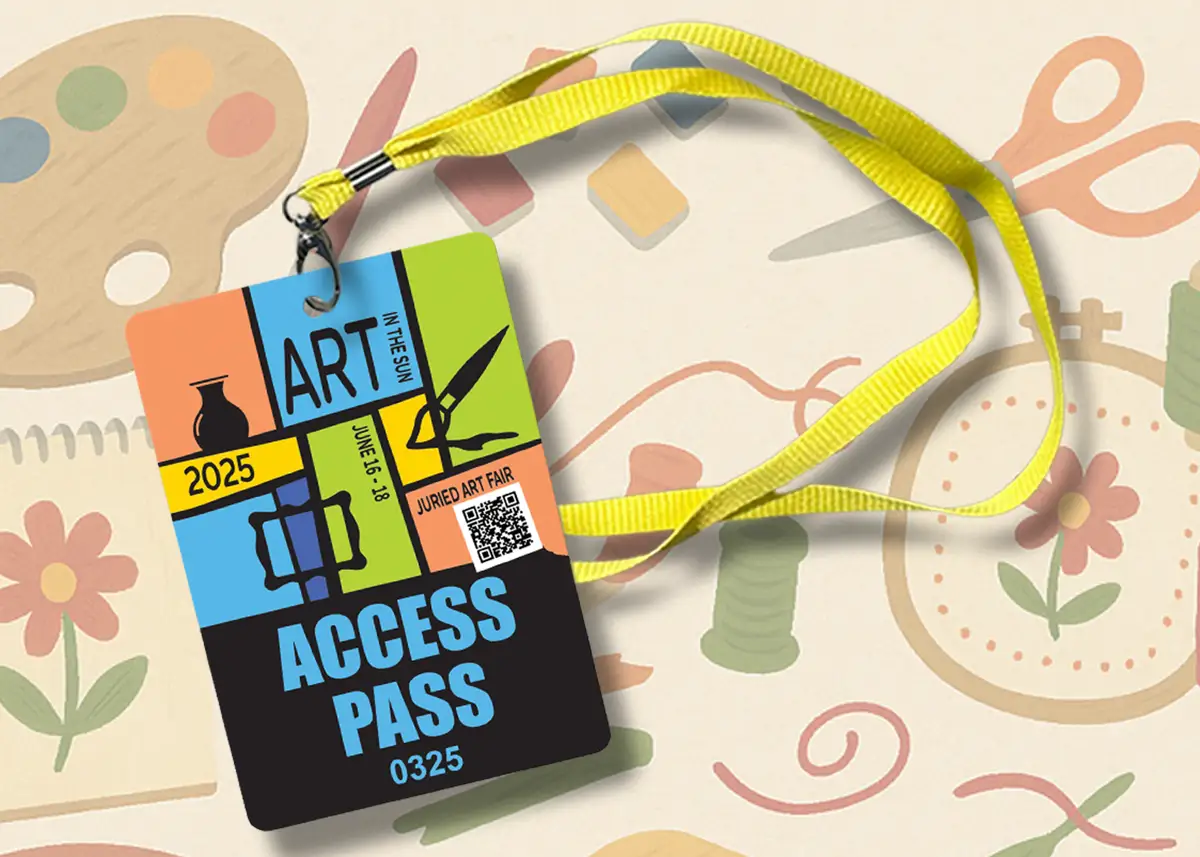
Portrait comes into its own when the card hangs. A card on a lanyard or a clip hangs from its top edge, and with a slot in the short edge a portrait card hangs straight and reads the right way up. A passport-style photograph sits naturally above the name, which is why most staff ID cards are portrait.
- Staff ID and volunteer cards worn on a lanyard
- Event, VIP and backstage passes: our event passes are portrait by design, at 70 x 100mm or 80 x 120mm
- Cards with a photograph of the holder
- Business cards for creative businesses that want to stand out
Holes and slots
If the card will hang from a lanyard or clip, the orientation decides where the slot goes, and the slot decides which way up the card hangs. Holes are 5mm across and punched 6mm in from the edge; slots are 15 x 3mm and usually centred on one of the edges.
Work the hole or slot into the design rather than around it: keep text and faces clear of it, and the best ones look deliberate rather than punched. Holes and slots are not available on RFID cards. See holes and slots and our lanyards.
Extras on a portrait card
- Magnetic strips always run along the card’s long edge, 3mm in from it, so on a portrait design the strip runs down one side of the back. Leave that 13mm band clear in your artwork.
- Signature strips can be any size. A typical strip is 75 x 8mm, which suits a landscape back; on a portrait back, a shorter strip fits the width better.
- Barcodes need their full width to scan, so on a portrait card set them across the card and keep them clear of a slot.
- Hot foil cards can’t be printed within 3mm of the two long edges, whichever way up you design them.
Front one way, back the other
The two sides don’t have to match. A landscape front with a portrait back is common on staff cards, with the photo and name on the front and building rules or an emergency contact on the back.
Check the way roundIf the back reads a different way from the front, say so when you send the artwork, and check it on your proof. The free photorealistic proof shows both sides as they’ll be printed, so this is the moment to spot a back that would be upside down when the card is turned over.
Setting up portrait artwork
- Set the page to 60mm wide by 92mm tall. That’s the 54 x 86mm card plus 3mm of bleed on every side.
- Keep text 3mm inside the edge, and clear of any slot or hole.
- Use CMYK and high resolution, as for any card. The artwork setup guide covers both.
Not sure which way round your design works best? Our design service can lay it out either way for £29 +vat, and you can see both before you choose.
Questions & Answers
-
Can plastic cards be printed portrait?
Yes. It’s the same 86 x 54mm card, designed the other way up. Set your artwork up at 60mm wide by 92mm tall, which includes 3mm of bleed all round.
-
Is portrait or landscape better for an ID card?
Portrait, if the card is worn on a lanyard or clip or carries a photo of the holder. Landscape, if it’s kept in a wallet or swiped through a reader.
-
Does a portrait card cost more?
No. It’s the same card turned the other way, at the same price.
-
Can the front be landscape and the back portrait?
Yes. Tell us when you send the artwork, and check the way round on your free photorealistic proof, which shows both sides as they’ll be printed.
-
Where does the magnetic strip go on a portrait card?
Along the card’s long edge, as on every card, 3mm in from the edge. On a portrait design it runs down one side of the back, so leave that 13mm band clear.
-
Where should the slot go for a lanyard?
Centred on the top edge: the short edge for a portrait card, the long edge for a landscape one. Slots are 15 x 3mm; holes are 5mm across, 6mm in from the edge.
-
What size is a portrait plastic card?
54mm wide and 86mm tall, with rounded corners. Our event passes are larger portrait cards, at 70 x 100mm or 80 x 120mm.
Ready to order?
Send us your design, portrait or landscape, and we’ll email a free photorealistic proof of both sides before anything is printed.
Need a slot, a hole or a lanyard? Tell us on your quote request and we’ll include them.