


Digital vs Plastic Loyalty Cards
Should your loyalty scheme live in an app or on a plastic card? Both work. They suit different businesses, and the answer usually depends on what your till can already do and how your customers like to shop.
This guide compares the two point by point, covers when each one is the right choice, and shows how a plastic card with a barcode or QR code can give you the data of a digital scheme without asking anyone to download anything.

The short versionA plastic stamp card is the quickest and cheapest scheme to start, and every customer can join it. An app gives you customer data and a way to send offers, but only to customers who download it. A plastic card with a barcode or QR code that your till reads gives you both.
The difference, in one picture
The scheme can be identical: buy so many, get one free. What changes is where the stamps live. In an app they live on the customer’s phone and in your software. On a plastic card they live in the customer’s wallet, as stamps, or in your till, against the card’s barcode.
Compared, point by point
| Loyalty app or digital card | Plastic stamp card | Plastic card with a barcode | |
|---|---|---|---|
| Cost to start | Usually a monthly subscription, or the cost of building an app | The cards, once: from 25 cards | The cards, plus a till or software that reads them |
| What the customer needs | A smartphone, the app or pass, and often an account | Nothing | Nothing |
| Joining at the till | Download or scan, then sign up | Hand over a card | Hand over a card |
| No signal or flat battery | Doesn’t work | Works | Works |
| What you learn | Visits and spend, plus contact details if customers agree | Only how many cards come back full | Visits and spend, against each card |
| Reminding customers | Notifications, if they’re switched on | They see your card every time they open their wallet | The same, and a key fob version lives on their keys |
| A lost card | Nothing lost, if the account is backed up | The stamps go with it | The points are safe on your system |
| Fake stamps | Hard to fake | Possible, unless your stamp or punch is distinctive | Hard to fake |
Which one to choose
A plastic stamp card
If you want a scheme running next week, at a known one-off cost, that every customer can join in seconds. It suits cafés, salons, barbers and most independents.
A plastic card with a barcode
If your till or loyalty software can already read a barcode or QR code. You get the data of a digital scheme, and the customer gets a card that works without a phone.
An app
If your customers already use your app or website to order, or you want to send them offers directly. Plenty of businesses run an app and still hand out cards to customers who won’t download one.
An honest noteWe print plastic cards, so we’re not neutral. But we’d rather you chose the right scheme than the wrong card: if an app suits your business better, use one. If you’re not sure, the barcode card is the safe middle, because it works with or without the software behind it.
The best of both: a card that links to your system

Most loyalty software and many tills can read a barcode or a QR code, so a plastic card can be the customer’s way into a digital scheme. Each card is printed with its own number, as a barcode, a QR code or both, and your system records visits and spend against it.
- Barcodes can be Code39, Code128 or EAN5. Ask your software provider which one it reads.
- QR codes can carry a different number or web address on every card, supplied in an Excel file.
- Magnetic strips suit tills that already have a swipe reader.
- A shared QR code printed on every card can send customers to your sign-up page, and costs nothing extra because it’s part of the artwork.
- Key fob cards carry the same barcode on a tag that lives on the customer’s keys, so it’s always with them.
Our guides to QR codes v barcodes and adding a barcode to a loyalty card explain how to match the code to your system. Order a postal proof if you want to test a real card on your own scanner before the full order is printed.
A word on customer data
A plain stamp card holds no personal information, which makes it the simplest scheme to run. As soon as a scheme records who a customer is, by name, email or a card linked to their details, you’re responsible for that data under UK GDPR, whether it’s held in an app or in your till. Keep personal details in your system, not printed on the card: a card number is enough to link the two.
Questions & Answers
-
Are plastic loyalty cards still worth it?
For many small businesses, yes. There’s no monthly fee and nothing for the customer to download, so everyone who’s offered a card can join, and the card reminds them of you every time they open their wallet.
-
What’s the difference between a digital and a plastic loyalty card?
Where the scheme lives. A digital card lives in an app or phone wallet and in your software. A plastic card lives in the customer’s wallet, either as stamps on the card or as a barcode your till reads.
-
Can a plastic loyalty card work with loyalty software?
Yes, if your software can read a barcode, QR code or magnetic strip. We print each card with its own number, from a start number or an Excel file, and your software records visits against it.
-
Can you print a QR code that links to my sign-up page?
Yes. The same QR code on every card is part of your artwork and costs nothing extra. A different code on every card is an optional extra.
-
Which barcode should I use for my loyalty system?
Ask your software or till provider which format it reads. We print Code39, which is the most popular, as well as Code128 and EAN5.
-
Do you make app or phone wallet loyalty cards?
No. We print physical cards. Digital passes come from your loyalty software provider, and many businesses offer both.
-
Do loyalty cards cause problems with GDPR?
A plain stamp card holds no personal information. Once a scheme records who a customer is, you’re responsible for that data under UK GDPR, so keep personal details in your system rather than printed on the card.
Ready to start your scheme?
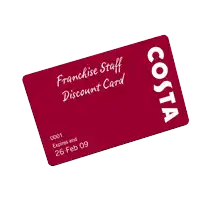
Plastic loyalty cards start at 25 cards, with barcodes, QR codes and numbering available on every card.
Tell us what your till or software reads and we’ll quote for the right card, with a free photorealistic proof before anything is printed.