

Key Fob Card Examples
Key fob and key tag design ideas
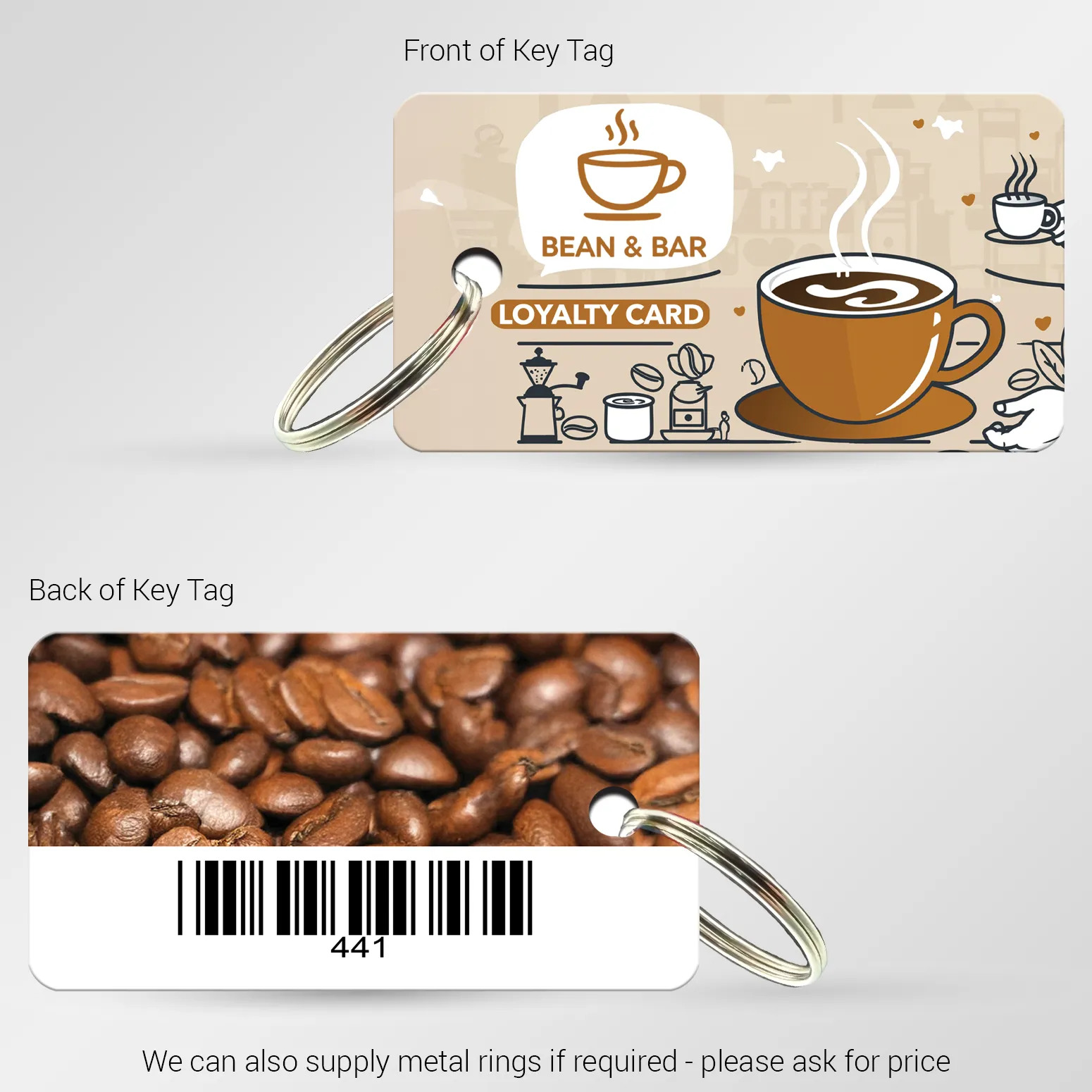
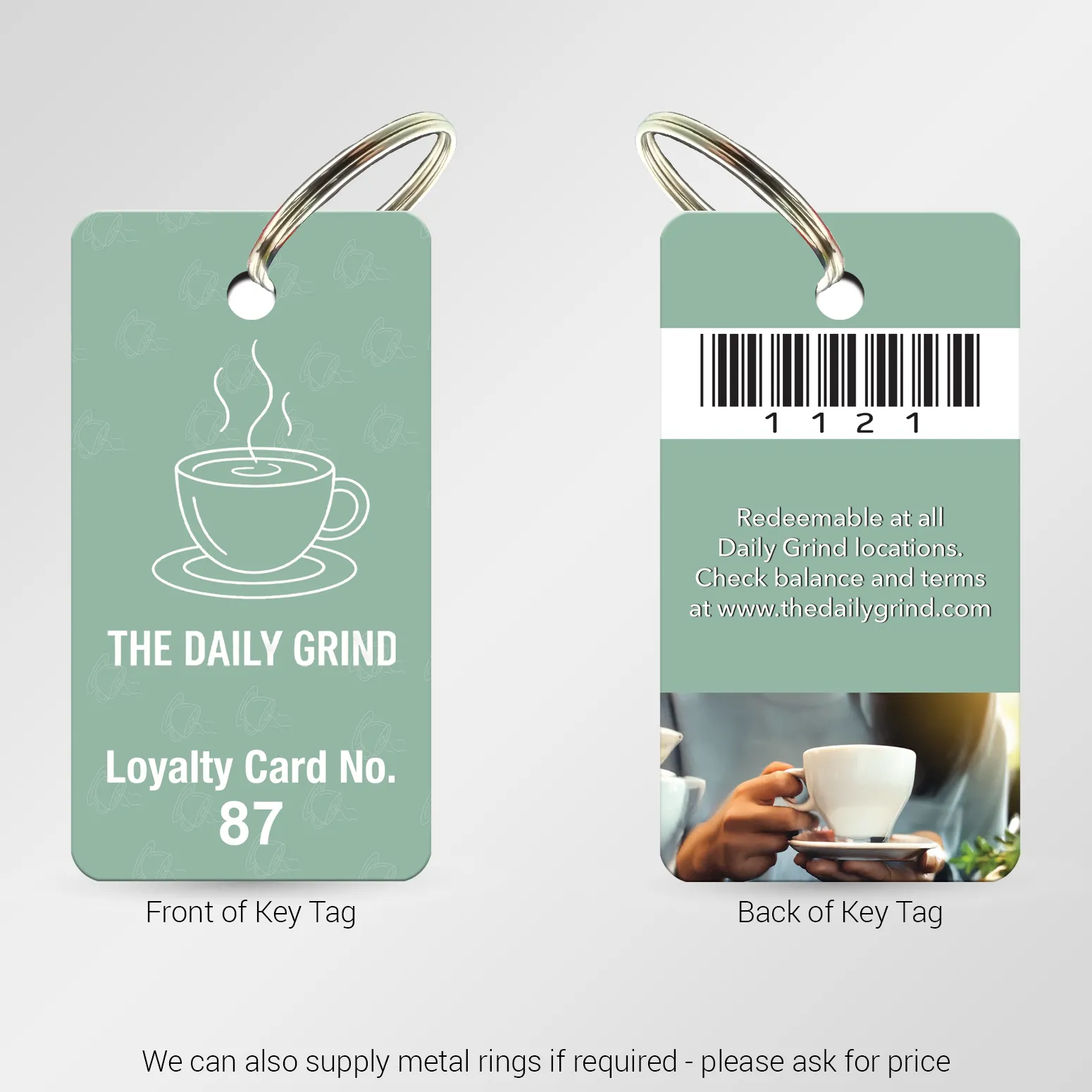
Key tags are small, hole-punched PVC fobs usually attached to a keyring or lanyard clip — commonly used for loyalty schemes at retailers, gyms, and salons where a full-size card is impractical to carry alongside house or car keys. They can carry a barcode, QR code, or sequential number for scan-in use at a till or check-in point, and are typically ordered in the same design as a matching full-size membership or loyalty card.
Do you see a design that you like?
Love one of our examples? Let’s use it as inspiration!
If you spot an example design that catches your eye, we can use it as a starting point to create your own design.
We’ll tailor the layout, colours, logos, and text to suit, all included as part of our Design Service.
Just tell us what you like and send over any logos and pictures, and we’ll do the rest.

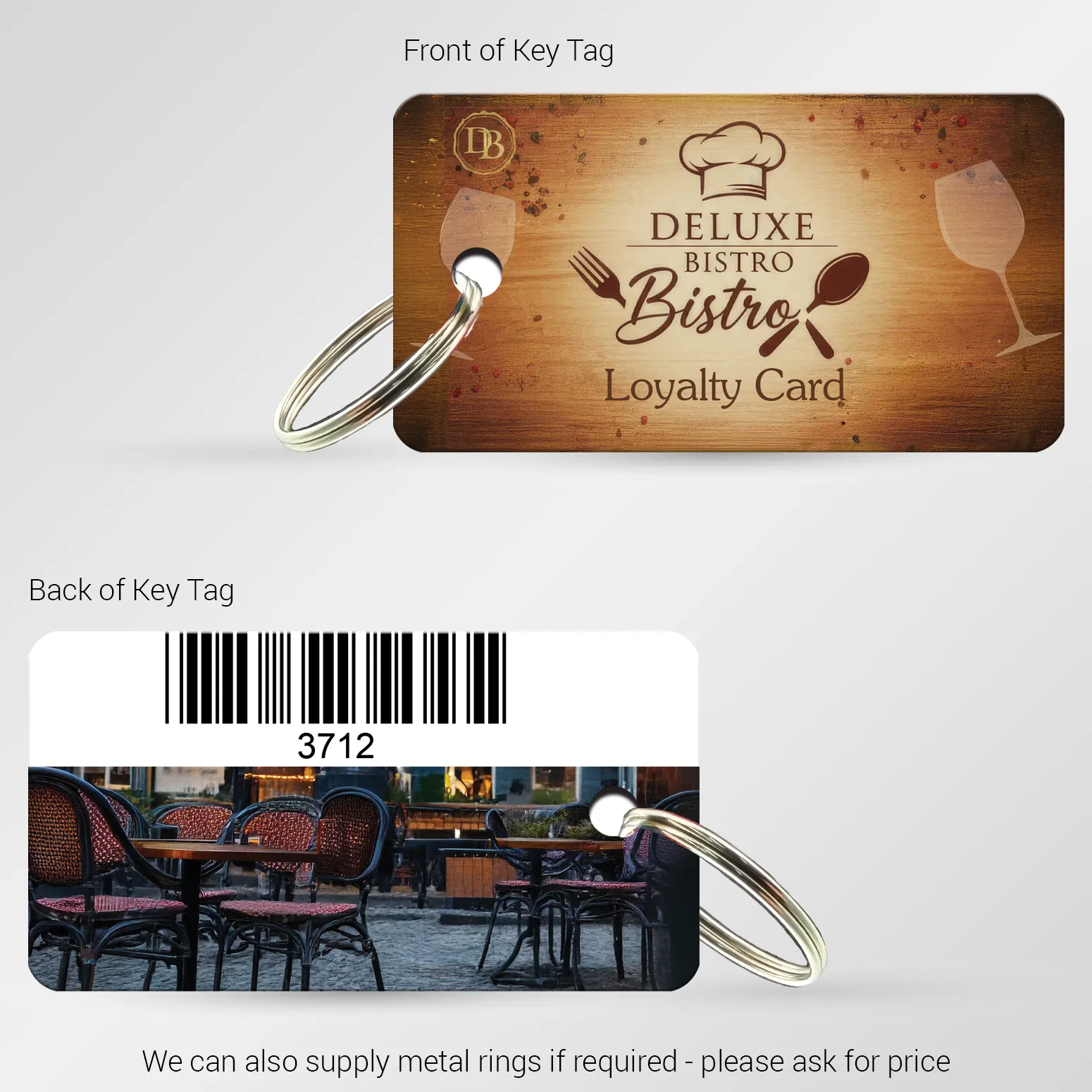
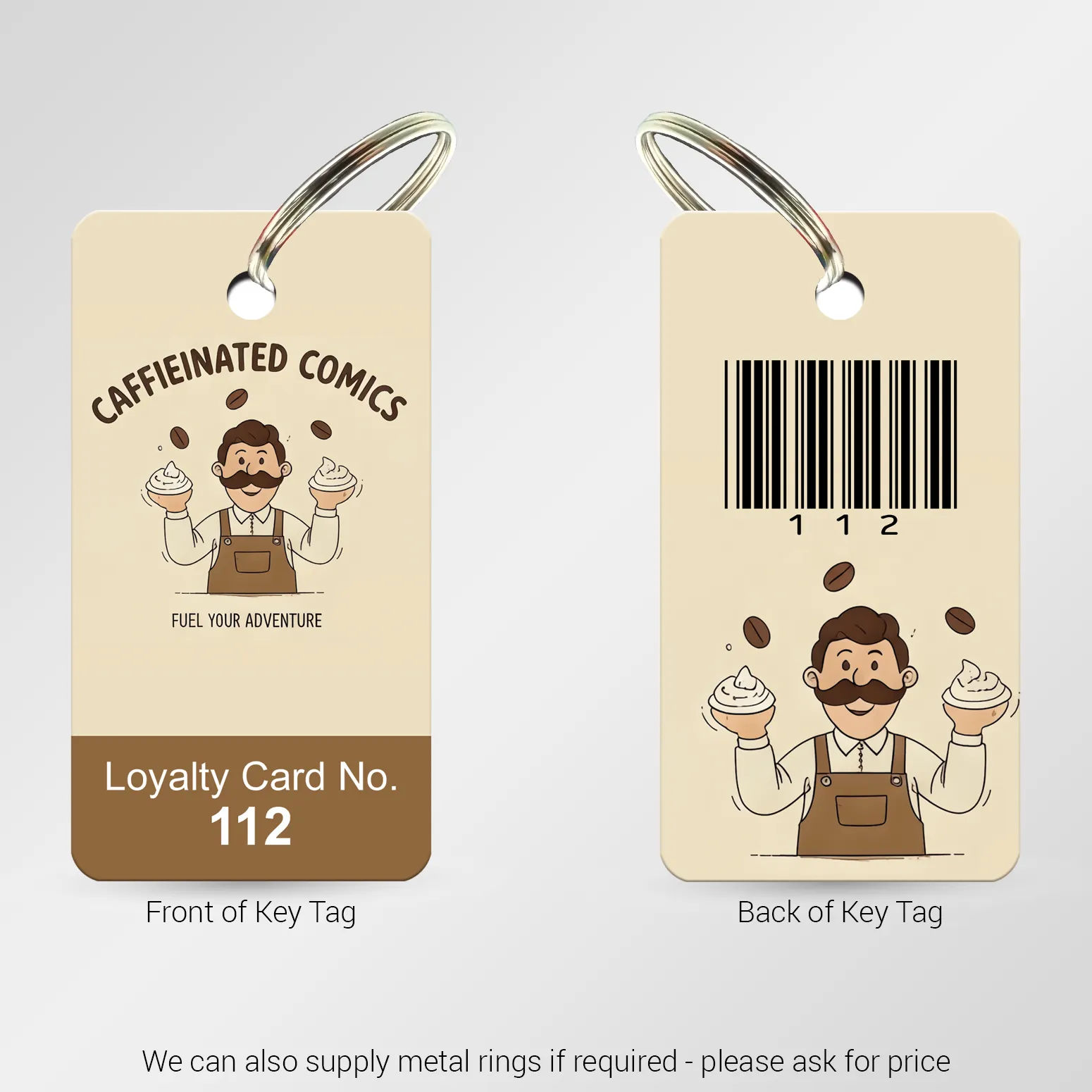
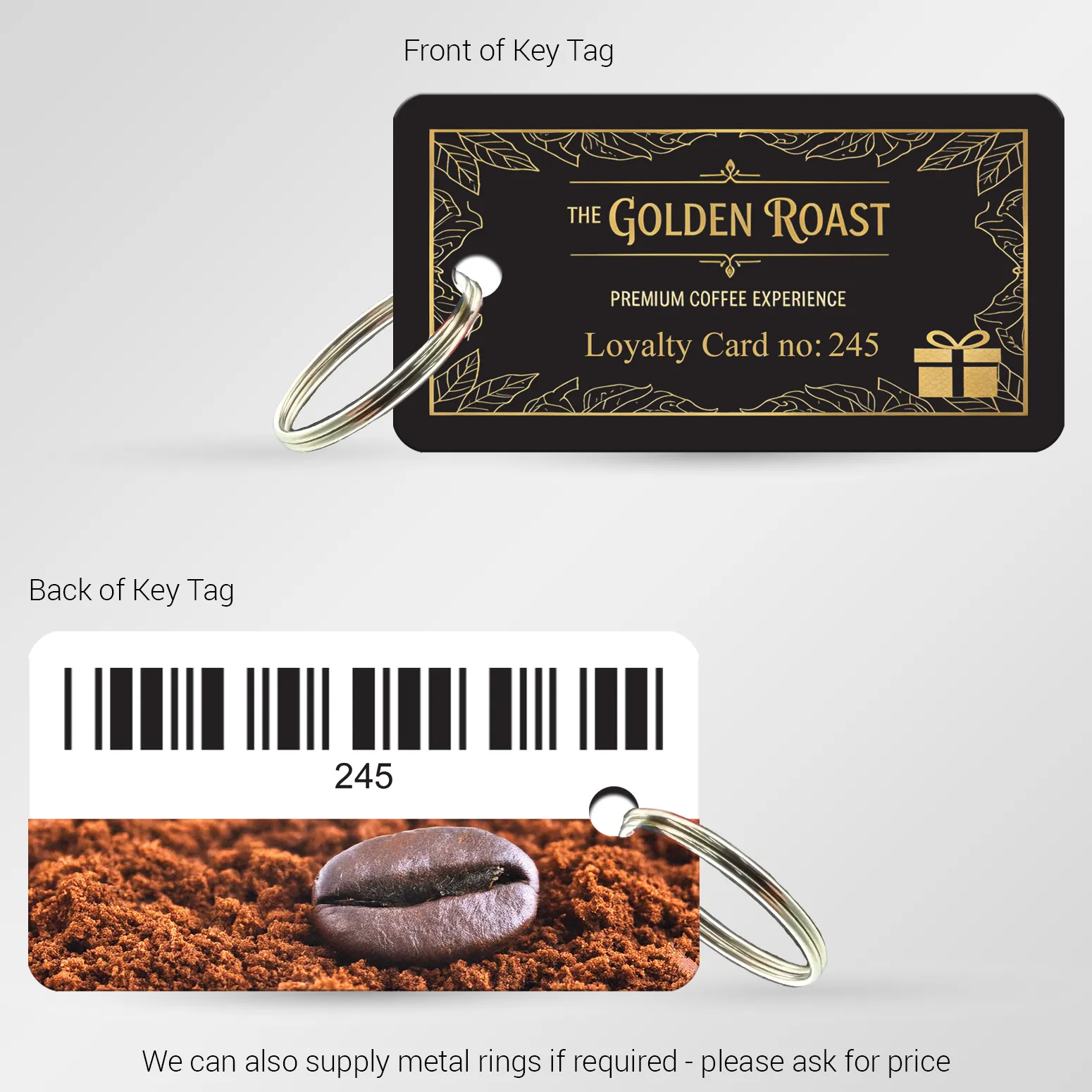
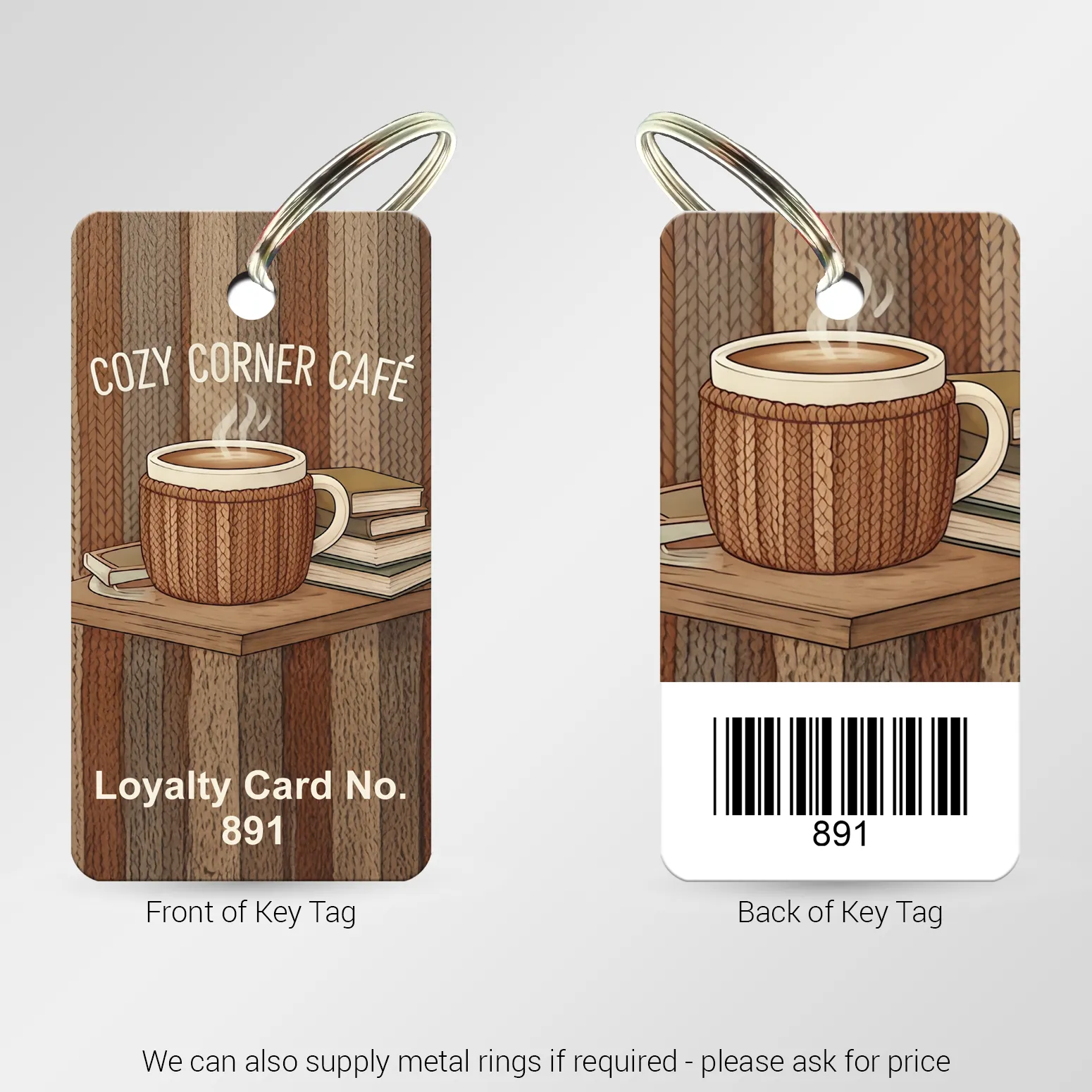
Designing for 54 x 29mm
A key fob card gives you about a third of the area of a full-size card, and that constraint shapes every good design on this page. The instinct is to shrink an existing card artwork down. It rarely survives the journey: type that was comfortable at 86mm becomes unreadable, and a detailed logo turns to mush.
What works is deciding what the tag is actually for and printing only that. For most loyalty schemes the answer is a recognisable mark, the business name, and a barcode — and nothing else. Addresses, opening hours and terms belong on the full-size card, or behind a QR code.
If the tag carries a barcode, give it room. A barcode needs clear space either side to scan reliably, and squeezing one to the edge of a 54mm tag is the most common reason a fob reads inconsistently at a till. We will flag it on your proof if it looks tight, but it is easier to design in from the start.
Built to Live on a Keyring
Our key fob cards are made from solid 760-micron PVC — the same thickness as a bank card — rather than the thin printed tags that come folded into a card. That matters because of where they end up: on a keyring, in a pocket, grinding against house keys and a car key for years.
The design is sealed beneath the plastic surface rather than printed on top of it, so metal keys cannot scratch it off and it will not fade. A tag issued today should still be scanning and still be legible long after the paper loyalty card it replaced would have disintegrated.
They measure 54 x 29mm with a 4mm hole punched ready for a keyring, and we can supply metal split rings with them if you need them, which saves you sourcing those separately.
How Schemes Actually Use Key Tags
Key tags come into their own where a full-size card is impractical to carry. Retailers, gyms and salons make up most of what you see in the examples above — places a customer visits often, usually without planning to, and where the difference between a scheme that works and one that does not is whether they have the thing on them.
Most orders are placed as a matching pair with a full-size card in the same design, so members can keep whichever they prefer. If you would rather issue both as a single item, a combo card is a card and a key tag joined together that the member snaps apart — one item to hand over, two things to carry.
Barcodes, QR codes and sequential numbering are the usual additions, and variable data means each tag can carry its own number from an Excel file. Where a tag and a matching card are both issued to one person, make sure both carry the same number so the two scan to a single account.
Key Fob and Key Tag FAQs
What size are your key fob cards?
54 x 29mm, with a 4mm hole punched ready for a keyring. They are 760 microns thick — the same as a bank card — rather than thin punch-out tags.
Do you supply the keyrings?
We can supply metal split rings with your order if you need them, which saves sourcing them separately.
Can key tags be printed on both sides?
Yes, full colour on both sides. Most designs put the mark and name on the front and the barcode or number on the reverse.
Will the print wear off on a keyring?
No. The design is sealed beneath the plastic surface rather than printed on top, so metal keys grinding against it cannot scratch it away and it will not fade.
Can I just shrink my existing card design onto a tag?
Usually not successfully. At a third of a card's area, type becomes unreadable and detailed logos turn to mush. Better to design the tag as its own small job — mark, name, barcode.
How much space does a barcode need on a tag?
More than people expect. A barcode needs clear space either side to scan reliably, and crowding one against the edge of a 54mm tag is the most common cause of inconsistent reads at a till.
Can I order matching cards and key tags?
Yes, and most people do. If you would rather issue both as one item, a combo card is a card and key tag joined together that the member snaps apart.
Can each tag have its own number?
Yes. Supply the numbers in an Excel file and each tag is printed with its own. If a member also gets a full-size card, make sure both carry the same number so they scan to one account.